


Trust, stablecoins, and the AI margin squeeze: What McKinsey and QED’s fintech report means for banks
- Max Flötotto, who leads McKinsey’s global retail banking practice, and Mike Packer, a partner at QED Investors, just co-authored a report mapping where fintech goes next — and they agree on almost everything in it.
- We dig into why “a feature is no longer a fintech,” why only 1% of stablecoin volume is actual end-user payments, and why the simplest version of banking — deposits and loans — may be the part most at risk from AI agents.
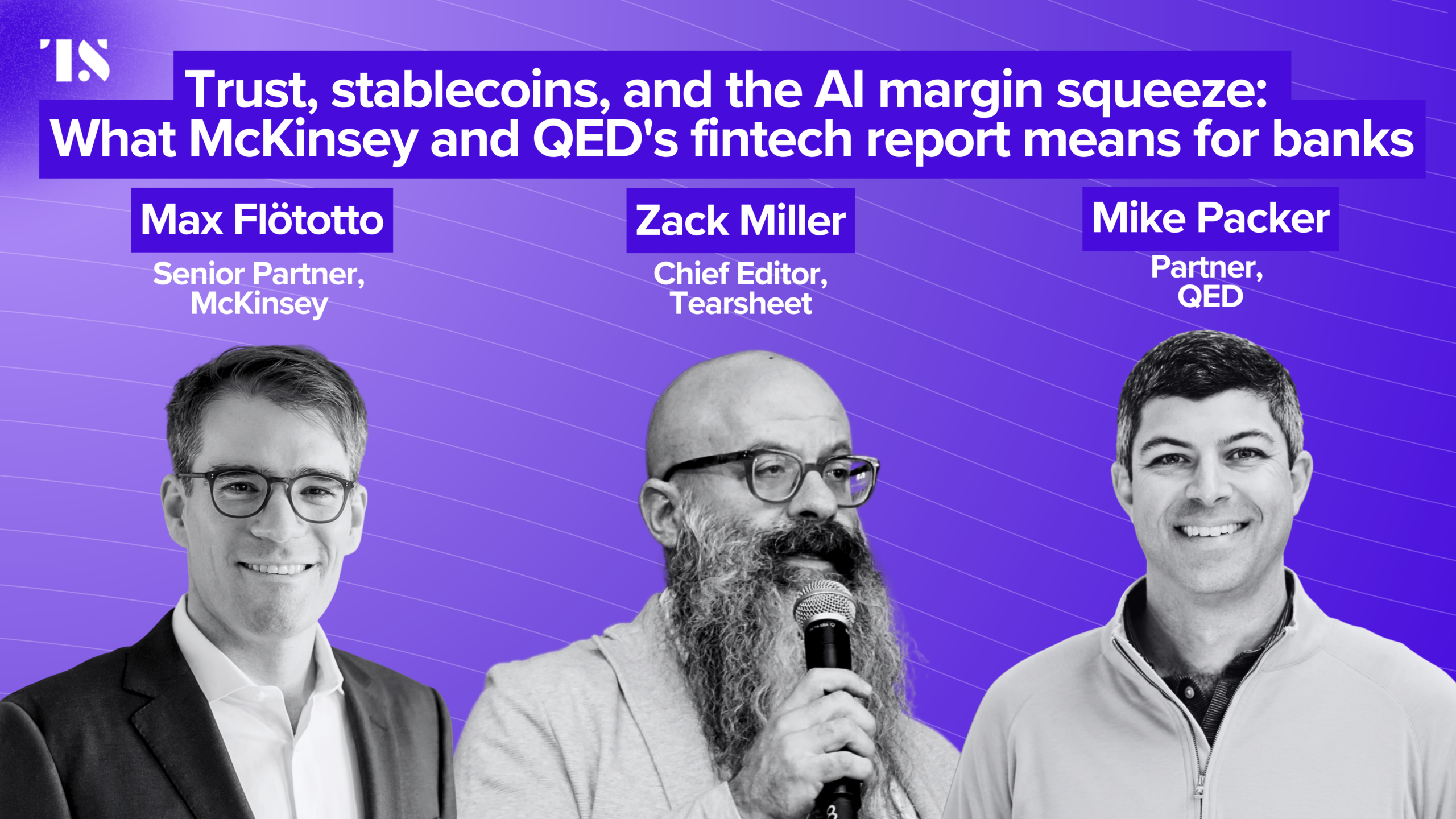
Fintech just lived through four distinct ages — pioneers, growth-at-all-costs, the 2021-22 hype cycle, and the brutal reset that followed. Now we’re in a fifth: bigger, more profitable, and more disciplined than any version that came before it. Stripe’s reportedly eyeing a six-figure IPO. Fintech listings tripled investor appetite this year. And yet talk to anyone who lived through 2021, and they’ll tell you this doesn’t feel anything like that boom.
To make sense of that contradiction, I sat down with the authors of a new joint report from McKinsey and QED Investors — two firms that sit on opposite sides of the table from the fintechs they study. Max Flötotto is a senior partner at McKinsey, where he leads the firm’s global retail banking practice and coordinates its fintech work across Europe. Mike Packer is a partner at QED, leading growth-stage investing globally for a firm that’s been backing fintech since its earliest days, nearly two decades now.
We dig into the report’s biggest findings: why the simplest version of banking — collecting deposits, making loans — is structurally at risk if customers start letting their own AI agents shop for the best rate; why fintechs have, for the first time, actually overtaken incumbents on trust in Europe, even as banks ha ve closed much of the product gap; and the massive spread in how seriously banks are actually taking AI, from “talking about thinking about it” to rebuilding their entire operating model around it.
We close with each of them picking the one trend out of six in the report that they think matters most for the next decade.
Max, Mike, welcome to the show.
Watch the episode
Listen to the full podcast
Subscribe: Apple Podcasts I SoundCloud I Spotify
Top-line Takeaway: AI, stablecoins, and fintech are often discussed as separate trends. This conversation argues they’re becoming one story. McKinsey and QED Investors contend that banking’s next competitive advantage will come from rebuilding operating models around AI, earning trust that rivals incumbents, and preparing for a world where money increasingly moves in real time. The bigger risk may be AI reducing banking itself to a commodity, forcing incumbents to compete on efficiency, distribution, and customer relationships rather than products alone.
Read the whole transcript (for TS Pro subscribers)
Where the report’s authors actually agreed and disagreed
…