


Stellar CEO Dixon wants tokenized assets to do more than sit on a blockchain
- Stellar’s CEO wants the $5 billion in tokenized assets on its network to move from “useful” to “usable” to “used,” serving as collateral, repo, and lending.
- Dixon says banks should identify a need before tokenizing, and that issuers prioritize compliance controls, uptime, and quick integration over new features.
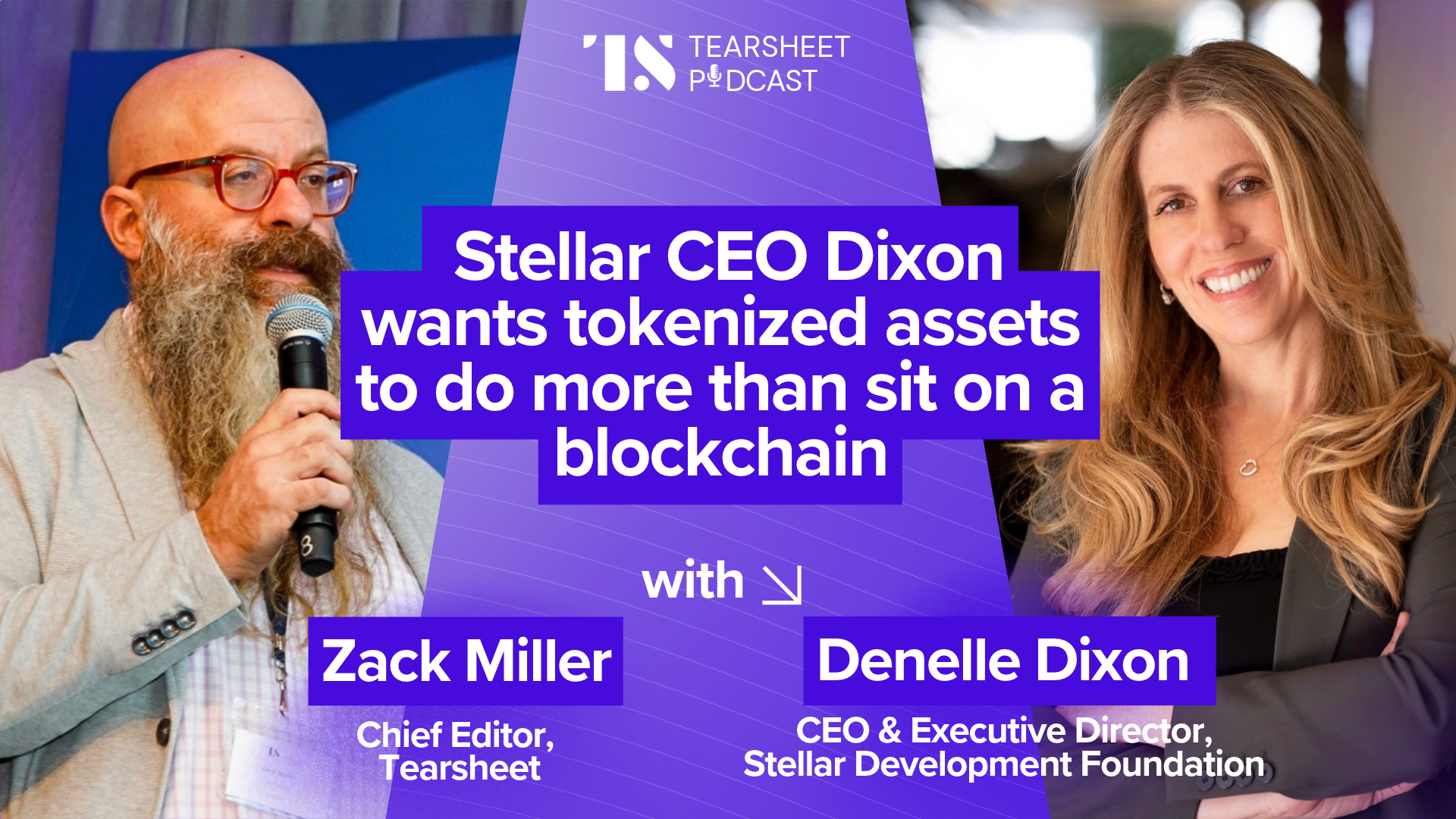
Over $5 billion in real-world assets now sit on the Stellar blockchain. Denelle Dixon, CEO and executive director of the Stellar Development Foundation, wants to see them put to work.
Speaking with Tearsheet at Meridian 2026 in Lisbon, Dixon described a three-stage progression: Assets that already generate yield are “useful.” The next stage is “usable,” meaning they can serve as collateral, in repo, or in lending and borrowing, all on-chain. The last is “used,” when they create real utility.
“Until all of those assets that are over here in the first category that are useful have gotten moved to the used category, I’m not going to be happy,” she said. “If we can’t do everything that you can do in traditional finance and then some, there’s not a lot of point to it.”
Dixon joined the foundation in 2019, when payments and asset issuance were its focus. Stellar drew some skepticism for skipping the meme-coin cycle, earning the nickname “the dinosaur chain.” She told her team to keep going. “Keep focused on the game, focus on the field. Don’t look in the stands.”
Watch the full podcast
Listen to the full podcast
Subscribe: Apple Podcasts I SoundCloud I Spotify
Banks should start with a need
Stellar is integrating with DTC’s tokenization service, with a target of the first half of 2027. Dixon says banks arriving at the table often know they want to tokenize but not what they want it to accomplish.
“I don’t like when people come in and they’re like, ‘We need to tokenize,’ because everybody’s tokenizing,” she said. Her first questions are practical: “What is it? What do you want to do?” One example is internal treasury, where faster movement of funds and yield on weekends are within reach.
Her advice to product leaders over the next 90 days follows the same line. “You have to be thoughtful about what you want for your businesses,” she said. “You need to identify the problems first.”
Compliance and predictability come first
For issuers, the baseline requirements are compliance controls, stability, and ease of integration. Stellar offers clawback and freeze functions that help issuers meet regulator expectations. She also points to the network’s uptime record over the past 10 years, which she called “very unusual in this space.”
Banks need to start with asking how long integration takes, according to Dixon. “You don’t want to be sitting in an integration phase for a really long time,” she said. “You want to get to the piece where the asset’s actually doing the work for you.”
Risk officers want a network that behaves the same way each day. “I like to joke about the fact that people think that that’s boring, but boring is really good in many relationships.” When money moves, the recipient needs to know when it will be available.
Institutional privacy is still taking shape
Stellar has what Dixon described as almost the most privacy primitives of any chain. Few banks have tried them yet. “They don’t actually know what they want,” she said, though “they all want institutional privacy.”
Dixon had called 2026 the year for institutional privacy. The foundation is now working with banks on the designs they want to see.
Trust underpins the relationship
Dixon said institutional support “starts with trust,” and she made it a core value when she arrived at the Foundation. Institutions want to know who to call if something goes wrong and which team will help with integration.
She acknowledged the tension in a technology built to minimize reliance on any single party. “Stellar is decentralized. It’s an open network. You shouldn’t have to rely on trust. But the fact of the matter is, humans really want to feel like they can trust someone.”
Regulation and local currencies
Dixon spends considerable time with central bankers in Africa and Latin America. She wants them to understand that a dollar-denominated asset arriving in their market can still be converted into local currency or mobile money. “They want to protect their currency,” she said. “They don’t want to see the dollarization of the world. I personally don’t want to either.”
On US legislation, Dixon said she saw little chance of the Clarity Act passing and told the foundation to build regardless. The GENIUS Act, she said, signaled that the technology is here to stay, and tokenized assets have grown on Stellar as institutions became comfortable. “It would have been great to have something like Clarity, but we don’t need it,” she said.
Her test for that conclusion is the same one she applied to the three categories of assets. Volume that moves into real activity on the network, she said, will carry the momentum.