


If you disappeared tomorrow, would your customers care?
- In Episode 3 of TER, Sara and Zack discuss what makes a fintech indispensable and which companies could disappear without customers noticing much of a difference.
- Zack picks PayPal for its role in opening up online commerce. Sara names Wise and Stripe, where value comes from solving recurring problems and becoming embedded in business operations.
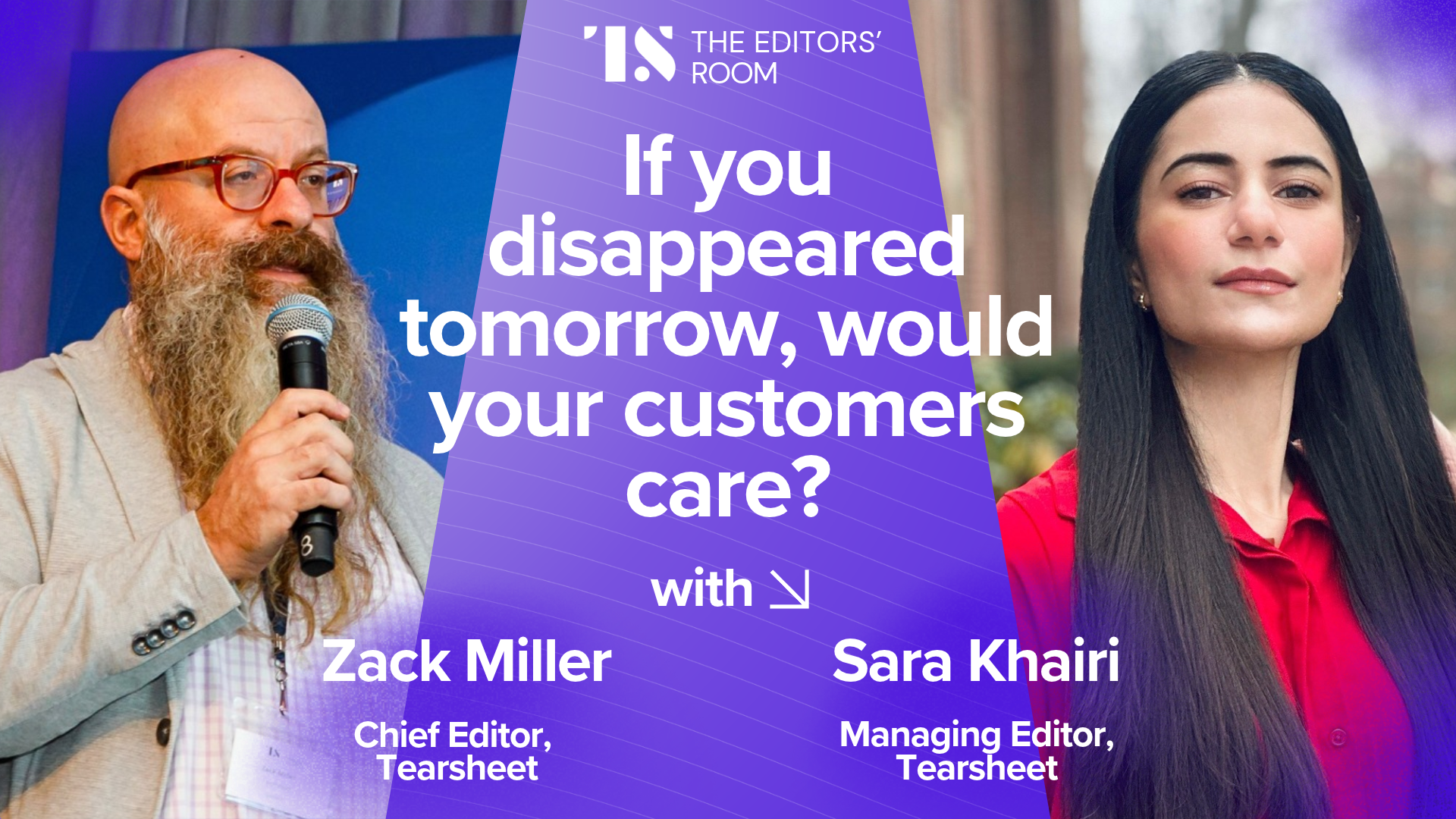
Welcome to The Editors’ Room [TER], a Tearsheet podcast series where Editor-in-Chief Zack Miller and Managing Editor Sara Khairi put the conversations that usually happen behind the scenes on the record (well, most of it, if not all).
It’s two editors comparing notes, challenging each other’s takes, and making sense of what is happening in financial services. Raw, conversational, and occasionally accompanied by a blooper.
For Episode 3, we asked a simple question: Which fintechs would we genuinely miss if they disappeared tomorrow?
Millions of users don’t necessarily mean a company has built a bomb product or something people can’t live without. Customers might stay for convenience, better pricing, or simply because switching hasn’t crossed their minds.
Zack chose PayPal, drawing on his own experience with the company. Sara picked Wise and Stripe, pointing to two sources of lasting value: solving a specific problem well and becoming difficult to replace within a business.
Watch episode #3
Listen to the full podcast
Subscribe: Apple Podcasts I SoundCloud I Spotify
PayPal and the power of making something possible
Zack’s pick was PayPal, a slightly contrarian choice given how easily other fintechs might have come to mind. His reasoning was personal.
He remembers opening his first PayPal account in the early 2000s and realizing he could send and receive money with relative ease. He later started an online business, integrated PayPal, and began accepting payments from customers around the world.
PayPal showed him what cross-border payments could make possible. Geography became less of a barrier, and a small business could reach customers far beyond its immediate market. The company was helping him build something.
That experience shaped Zack’s answer. A fintech can earn a lasting place in someone’s life by enabling something they couldn’t easily do before, not just by offering a convenient product. He also sees potential in PayPal’s next chapter, even as questions remain about its future direction.
Wise and Stripe offer different kinds of value
Sara approached the question from a practical angle: what does a fintech do for its customers, and what happens if that service disappears?
The first name she could think of was Wise that solves a specific, recurring problem really well of moving money across borders and currencies. Customers don’t need to use it for every financial service for it to matter. But losing access could leave a noticeable gap in their financial lives.
Another name that came to mind was Stripe, which represents a different kind of indispensability. Its payment processing can be woven into a business’s checkout, billing, and other workflows. Replacing it could mean engineering work, operational risk, revenue disruption, and changes to business infrastructure.
One company earns its place by doing a particular job well. The other can become deeply embedded in how a business operates.
Both challenge the idea that a fintech must own the entire customer relationship to be valuable. Sometimes, being exceptional at one job is enough. In other cases, the value comes from becoming part of the systems customers depend on every day.
When a fintech becomes a “situationship”
The flip side is a company customers wouldn’t particularly miss if it disappeared.
Sara pointed to fintechs whose main selling points are lower prices, slicker interfaces, or better deals, without meaningful differences in what they deliver. Those advantages can attract users, but they don’t necessarily give customers a reason to stay.
If a competitor offers the same functionality at a similar or lower price, switching becomes an easy decision.
Sara described these relationships as a situationship: customers stick around while the arrangement works for them, without developing much attachment to the provider.
Zack connected the idea to the fintech funding boom, when companies raised enormous sums and new ventures seemed to emerge every week. Some never quite found their market or established a strong connection with customers. Many are now struggling.
Price and convenience matter, but competitors can replicate them. A company can acquire customers without earning their loyalty or grow without becoming essential.
The fintech value test
Zack’s PayPal story and Sara’s picks point to two ways a fintech can matter: it can make something possible, or it can become difficult to replace.
Neither requires a company to offer every financial product or become a customer’s primary provider. What matters is whether customers have a compelling reason to keep using it, whether that’s a recurring need, a business-critical workflow, or a service that changes how they operate.