


Mastercard’s Marc Pettican on the road to a $17.4 trillion virtual card market
- Mastercard projects virtual card spend will hit $17.4 trillion by 2029, and Marc Pettican explains what's fueling that growth.
- He details Mastercard's push into agentic payments, embedded finance, and a multi-rail strategy spanning cards, account-to-account, and stablecoins.
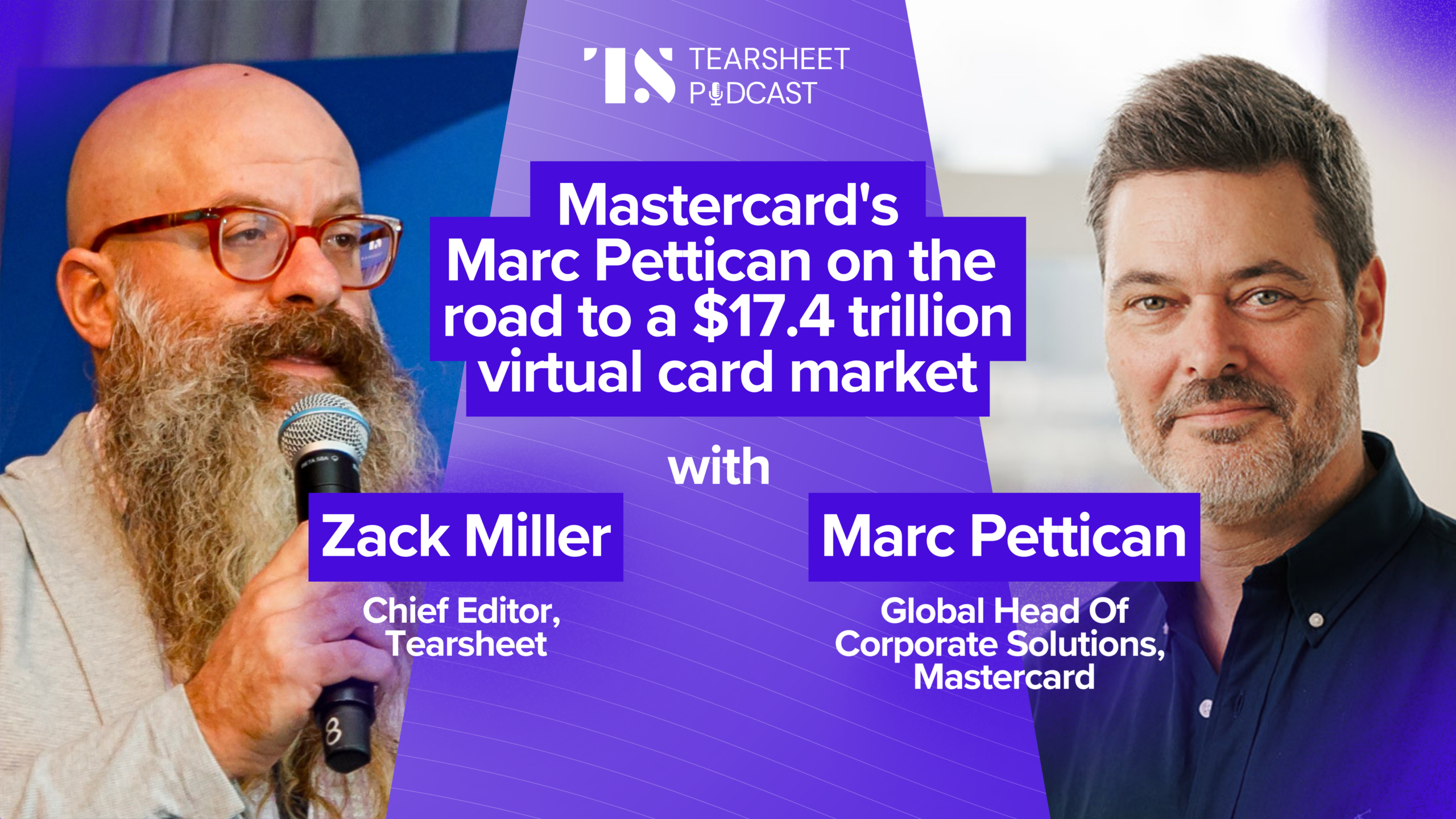
Every accounts payable and accounts receivable department runs on the same friction: invoices chased four or five times, payments late more than 30% of the time, and credit control teams that can run 20, 30, even 50 people deep at a mid-sized corporate. Virtual cards were built to solve exactly that problem, and the growth numbers show it — spend is projected to hit $17.4 trillion by 2029, according to Juniper Research. Today I’m joined by Marc Pettican, global head of corporate solutions at Mastercard, who’s spent decades working both sides of the payments ecosystem, from the merchant acquiring side to leading commercial cards.
We get into what’s really driving virtual card growth beyond the macro tailwinds, how Mastercard balances network economics between buyers and suppliers, and the build-versus-partner calculus behind expanding from travel into verticals like fleet and logistics, healthcare, insurance, and marketplaces. We also dig into embedded finance and the challenge of staying visible in the stack even as payments become invisible to the end user — plus where Mastercard sees its right to win in agentic payments, account-to-account transfers, and stablecoins. Marc closes with his advice for commercial card heads at mid-sized banks over the next twelve months.
Watch the episode
Subscribe: Apple Podcasts I SoundCloud I Spotify
Top-line Takeaway: For Mastercard’s Marc Pettican, the future of commercial payments isn’t about replacing one payment rail with another—it’s about orchestrating them all. As accounts payable and receivable remain burdened by manual processes, delayed payments, and working capital pressures, Pettican argues that virtual cards are becoming the foundation for re-engineering B2B cash flow. That strategy extends beyond travel into industries like healthcare, insurance, and logistics, while embedding payments directly into enterprise workflows and connecting cards, account-to-account transfers, and stablecoins. Mastercard’s role, he says, is to serve as the trust and orchestration layer that enables businesses to move money smoothly, regardless of how they choose to pay or get paid.
Read the whole transcript (for TS Pro subscribers)
Building an equal-sided ecosystem, from Barclaycard to Mastercard
…