


FIS’s Shane McWilliams on SMBs, data sharing, and the strategy that wins in a competitive environment
- Banks dramatically underestimate how many customers share financial data with third parties, and most of it happens through insecure screen scraping.
- Shane McWilliams of FIS explains why SMBs now expect their banks to serve as central financial hubs and how relationship-first thinking beats product-centric approaches.
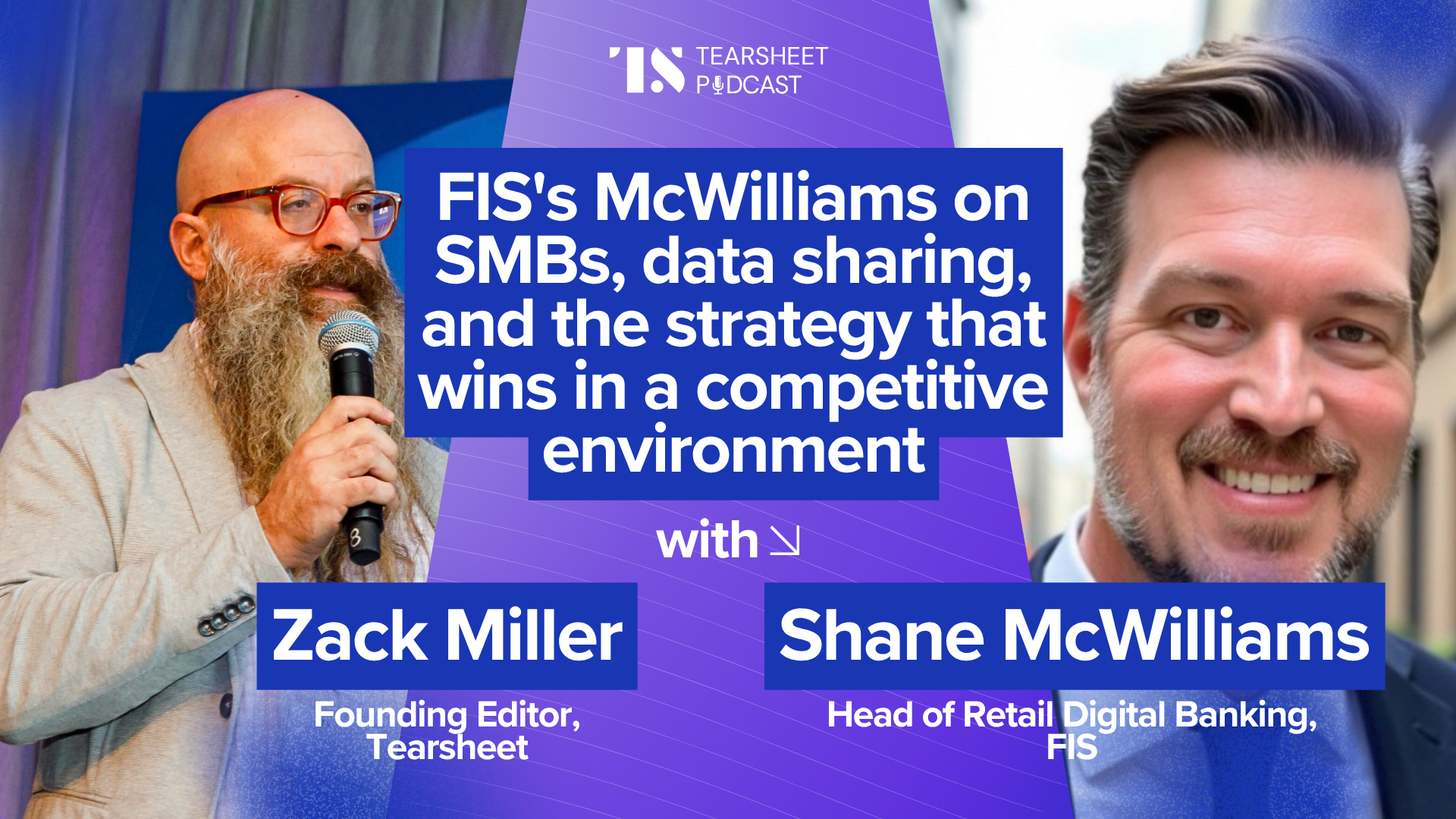
The banking industry stands at a critical juncture where customer expectations, technological capabilities, and security concerns converge. Speaking at the FIS Emerald Conference in Orlando, Shane McWilliams, Head of Retail Digital Banking at FIS, outlined three pressing challenges that will separate thriving institutions from those left behind: serving small and medium businesses effectively, enabling secure data sharing, and fortifying fraud protections.
“I spend the vast majority of my time thinking about our banks and their end customers,” McWilliams explained. “If we focus on that, then everything else that we need to think about also just works itself out.”
Many banks are still unaware of how dramatically the landscape has shifted. McWilliams noted that when he discusses data sharing with bank customers, their estimates of how many customers are already sharing financial data fall dramatically short of reality. This knowledge gap, he suggests, represents both a vulnerability and an opportunity for institutions to learn and adapt.
The path forward requires banks to move beyond traditional product-centric thinking toward a model that demonstrates genuine understanding of customer needs – whether that’s a small business owner juggling multiple financial tools or a consumer moving into a new home. Hear McWilliams break down how banks are succeeding in this environment and how those that position themselves as central hubs for customer financial lives rather than simply providing discrete products and services can win customer loyalty and business.
Watch the episode
Listen to the full podcast
Subscribe: Apple Podcasts I SoundCloud I Spotify
Meeting SMB expectations
SMBs represent one of the fastest-growing segments in banking, but their growth comes with increasingly sophisticated demands. McWilliams emphasized that SMB needs exist in “a lot of gray area,” making it impossible to create a one-size-fits-all solution.
The challenge extends beyond offering business checking accounts or loans. Modern SMBs expect their banks to serve as a central hub for financial operations – integrating everything from cash flow monitoring to accounting systems. “When you talk about businesses and small businesses, it’s the ability to see cash flow data or to have data flowing out to your accounting system. Having all that hooked into your banking environment is what allows everything to happen,” McWilliams said.
McWilliams predicts a significant shift toward consolidation, with bank technology serving as “a central nexus point” that eliminates the need for small business owners to navigate dozens of separate applications for invoicing, payments, and accounting.
The data sharing gap and troubles with screen scraping
Currently, banks dramatically underestimate how frequently their customers share financial data with third parties.
“In the last couple of months, every single bank that I’ve had this conversation with, if you ask them to guess what percentage of their users are [sharing data], they’re not even close,” he said. Unseen by banks, for customers, data sharing is a path to accessing an array of financial services like consolidating accounts with wealth advisors, using budgeting apps, or streamlining financial management; however, most of this happens through screen scraping, a process McWilliams describes as “super duper janky.”
Screen scraping creates multiple problems: it adds a potential fraud vector, slows down applications and websites, and often remains active long after customers forget they authorized it. The solution lies in APIs, which create clean, tokenized data connections that give users better control over their information, according to McWilliams.
To aid the transition away from screen scraping, FIS has built integrations with the top 10 data aggregators, allowing banks to enable secure data sharing while providing customers with centralized management of their connections. “Its a responsibility of the technology providers and the banks to try to create a place where you can go back and then manage those connections as an end user,” McWilliams said.
Moving personalization beyond UX optimization
Although most institutions talk about personalization, for McWilliams, the goal is to go beyond optimizing user interfaces and into demonstrating genuine knowledge of who customers are and what they need at specific moments.
This requires leveraging data intelligently. FIS has partnered with NGDATA to help banks target customers with timely, relevant offers. The applications extend beyond traditional life events like home purchases. “I think it’s going to get way more sophisticated, very quickly,” McWilliams predicted.
For this level of personalization to work, banks need comprehensive data access – without consolidated data, banks lack the insights necessary to deliver truly personalized experiences.
Building relationships that last
The growth of the SMB customer segment requires the banking industry to reevaluate the role they play in their clients lives, understand their centrality as a financial provider, and design experiences that center on ease and efficiency for the SMB owner: “If you can hit a home run and have that SMB out there, have the capability that they need, not have to shift through 55 different apps to do an invoice and to take payments. You’re going to be happy, and they’re going to stay with you,” he said.
This relationship-first orientation applies equally to retail customers. Banks that protect customers, offer appropriate services, and genuinely consider customer needs will build “really sticky relationships” that solve many of the competitive pressures facing the industry.
Continuing to think primarily in terms of products and loans rather than customer needs is “the historical way of thinking,” according to McWilliams, and no longer serves banks well in today’s environment.
The path ahead is straightforward but requires intentional implementation: “Orient around the customer, build those long-term, sticky relationships with your end users, and the rest will be fine.”