Podcasts

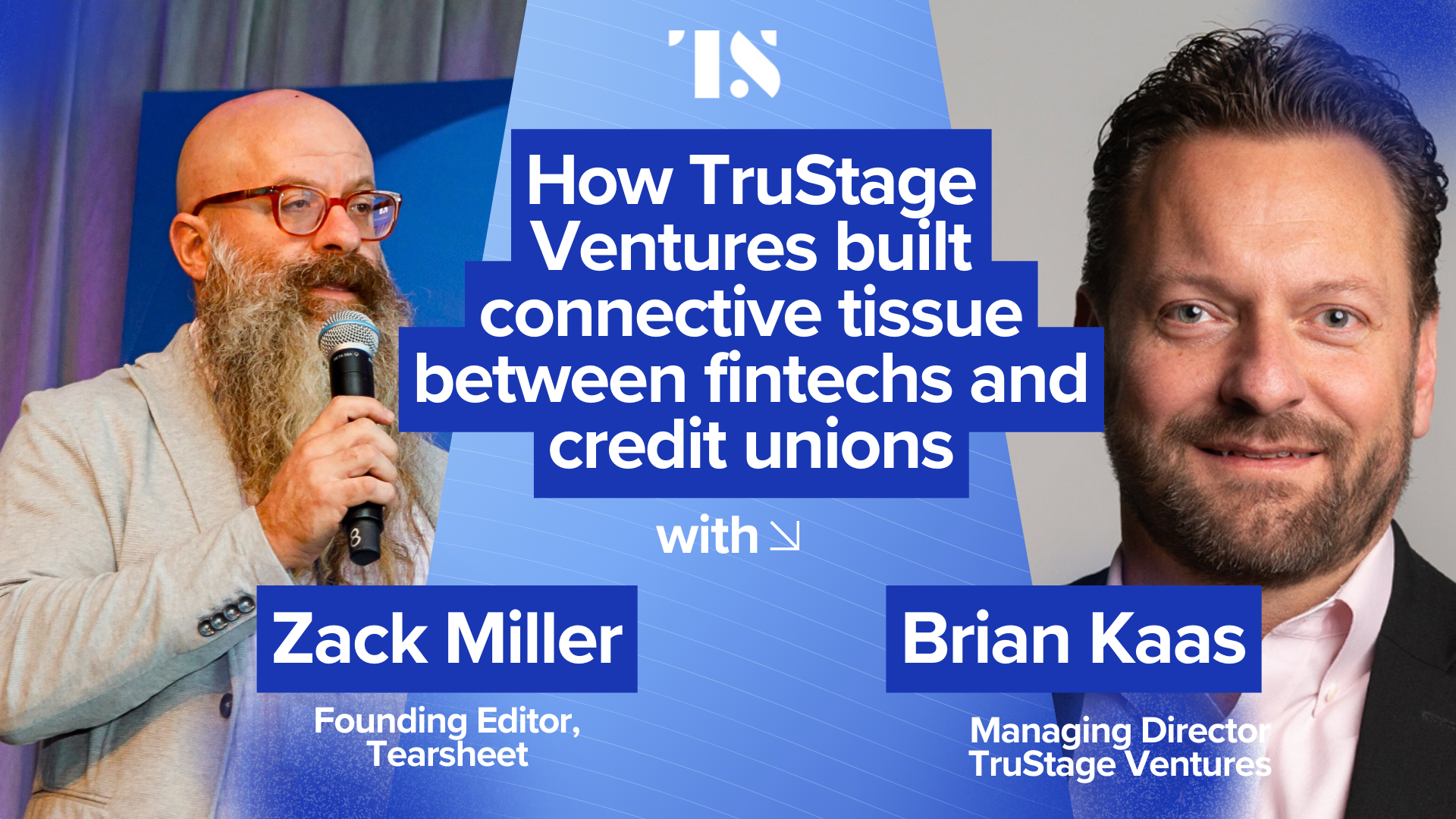
How TruStage Ventures built connective tissue between fintechs and credit unions

close

Email a Friend

How TruStage Ventures built connective tissue between fintechs and credit unions

For fintechs, cracking the credit union market is notoriously difficult. It’s relationship-based, insular, and requires a fundamentally different approach than banking. Many try and fail. But when done right, it opens up distribution to institutions serving over 140 million Americans.

Today I’m joined by Brian Kaas, president and managing director of TruStage Ventures, the corporate VC arm of TruStage — a $5.5 billion annual revenue insurer that works with 92% of credit unions nationwide. Since 2016, TruStage Ventures has deployed $400 million across 50 portfolio companies and facilitated over 3,000 partnerships between credit unions and fintechs.

We first spoke with Brian in 2021 when the fund was just gaining traction. Four years later, the portfolio has matured with companies like Ethos, Current, and SmartAsset, and Brian’s team has become essential connective tissue between innovative fintechs and credit union distribution.

We’ll dig into what makes credit union partnerships different, why so many fintechs struggle to break in, and why stablecoin solutions have become the number one request Brian’s hearing from credit union CEOs.

Watch

Listen

Subscribe: Apple Podcasts | SoundCloud | Spotify

Eight years of battle scars

Great to be here with you today. So four years, it’s been a long time. I certainly have a few battle scars to show. Since we last spoke, it has been kind of a wild ride, just in the venture capital world. Fortunately, the discussions are much different as we head into 2026 versus kind of getting through, you know, kind of the darkest days when SVB and other liquidity issues challenged the market.

I think what we’re seeing on the positive side in the credit union space is now more than ever, there’s really greater interest by credit union leaders of thinking creatively around ways to partner with fintech companies. So I think, you know, we’ve been in this space, really connecting credit unions and fintechs for almost a decade, and we’ve gone from skepticism at the very early days to curiosity to now, I’m almost saying more necessity, where credit unions realize, hey, the technology is moving so quickly, customer needs and member needs are revolving very rapidly. We need to partner with these fintech companies to make sure that we stay relevant and competitive into the future.

From competition to partnership

I think you know what makes a good partnership? Really, it’s a two way street, and that you have to have fintech companies that listen to the credit unions, what are their needs? What are maybe some of the distinctions between banks and credit unions, and then on the side of the credit union, it’s, how do I work with an earlier stage fintech company?

And we spend a lot of time with credit unions, helping to kind of educate them on the space, educating founders on how to work with credit unions, trying to kind of level set around kind of expectations. And you know, I think there is a maturity curve, and what we see with credit unions that really were on kind of the front end of fintech partnering now have a pretty well oiled machine, and we have others — credit unions are a broad spectrum — others that are just on the early days of that journey. So you know, a lot of lessons to be learned, but you know, like I say, I think it’s becoming increasingly more apparent to credit unions that fintech partnerships are really going to be critical to just the long term success of the industry.

Where fintechs stumble

I think for companies in our portfolio, and sometimes, we certainly talk to many, many more companies that are trying to enter the credit union space. You know, again, I think where sometimes they may stumble and fail is one, you know, over promising and under delivering. I mean, one of the things I think that founders are, they’re always afraid to say either no or yeah, we don’t have that capability. And what is really frustrating for the credit union leaders is that, you know, you said you could do X, but you really can’t. And sort of it breaks the trust between the partnership right out of the gates, and I feel like then you’re trying to salvage and rebuild trust, which can take a long time. And that’s like one of the biggest areas where I see early stage companies stumble.

I think not being responsive is another area where fintech companies can really kind of stumble. And within the credit union space, it’s a very collaborative environment. We’ll go to credit union events, and you know, you’ll have a panel of credit union CEOs all giving each other kind of best practices, of like, oh, I had this trouble. Well, yeah, you should do this. And you just don’t see that in other industries where, you know, like, you know, Microsoft and Google getting together and sharing ideas on how to improve their businesses. It’s great for companies that really do a good job of creating that trust and goodwill with credit unions, because they talk, and they become your biggest advocates, and that’s been a key to success. The flip side is, if you stumble out of the gates again, kind of fail to deliver what you said you could, that also spreads, and it can kind of taint a company’s reputation and make it very difficult for those companies to succeed in the credit union space.

The relationship skill set

I mean, I think it really is. I mean, again, I look at a couple of companies that we invested in, they had one or two credit union partners, and they — sounds cliche, but they listened. Like they went in there, spent time with those credit union leaders, really understood what the pain points were and kind of where credit unions found value. They, you know, would adjust and modify their product based on that feedback and that created that level of trust and goodwill.

But I think you know, more importantly, you sometimes will have founders that develop products in a vacuum, and when you’re kind of going through this co-development with live customers, you, you know, I think can build a much better product. And so that’s been another key to success that we’ve seen within our portfolio.

The 95% survival rate

Yeah, you know, kudos to Elizabeth McCluskey, who’s on my team. She leads the Discovery Fund. She has, you know, really an incredible talent of finding founders that really are addressing needs of consumers, especially around financial inclusion. And many of the companies in the Discovery Fund, you know, really are looking to address the underbanked segments of our population. And so I think that’s been very key.

The founders are very ambitious. They have incredible fight, if you will, more so than we see sometimes across other companies, and I think we really guide them of like, hey, let’s stretch that dollar. Let’s make sure we’re really smart about the investments. Yeah, we do provide follow on investments with these companies. So that’s helped them kind of incubate these ideas. Many of these companies are, you know, pre seed and seed stage at the later side for this fund.

But I think also we help get those early stage companies with credit unions, help them kind of build some of those first customers, you know, kind of providing opportunities to promote them across the credit union system. And that can be really challenging, like, how do you get those first couple of customers? How do you kind of get sort of endorsements to land your next 15, you know, it’s getting to kind of, you know, 20 customers. That can be the longest haul for early stage companies. And that’s been a big area where, you know, Elizabeth and our team have helped those companies, you know, kind of get to that next level and become a fundable company for Series A round.

Investable themes

We are a strategic fund, and we really are interested in a wide range of companies that can address the needs and technology gaps of credit unions, that have products that really will help that middle to lower middle market succeed financially. And TruStage also offers a broad range of financial products. So are these companies potential channels for us to offer our products?

And so we have invested a lot around lending technology and financial wellness solutions that credit unions can deploy to help better engage with, you know, their members, or attract younger members. So again, that can take many different flavors. I think, you know, it’s been really interesting, just with some of the latest advancements in AI, how that has kind of launched a new wave of fintech companies. And, you know, we’re also kind of very closely, you know, tracking and getting involved around stablecoin, and what are some of the implications to the whole payment infrastructure that could emerge with passage of the GENIUS Act and activity around stablecoin.

Staying fresh on credit union needs

Yeah, we have really the benefit because of the number of credit unions that TruStage reaches. There isn’t a week that goes by where either me or someone on my team isn’t having a one on one dialog with the C suite of a credit union. We invite credit unions to our campus headquarters, and our team will spend an hour. Hey, what are your pain points? What are you focusing on for next year? What is your strategy? And how can fintechs kind of play into that?

So we get just a lot of feedback through that channel. And we also will present at a lot of credit union conferences. A lot of times we’ll bring portfolio companies to join us on panel discussions, and again, creates incredible opportunities to really understand what credit unions are looking for through the platform that we fortunately have.

The stablecoin moment

It’s been really interesting to see the level of interest and attention that stablecoin has generated since, you know, really August, coming out of passage of the GENIUS Act, more so than even, you know, agentic AI, or any other topic or area of fintech over the last decade. I think it’s really probably a combination of a couple things. One, it’s an area that many credit union executives really had almost no knowledge of, so there’s, again, kind of an educational understanding of like, what is stablecoin, and as importantly, what is the impact on the credit union industry when they kind of learn about that.

I think the next biggest concern shifts more to concern about the potential for deposit outflows and the impact on different revenue streams that credit unions have. And, you know, kind of the lifeblood of credit unions is their ability to provide loans. And they’re not for profit organizations, so they don’t have big profit margins to rely on. So if you start to take away a couple of revenue streams and decrease lending, they become very concerned.

We’ve been leading a joint effort, a working group for stablecoin. I co-lead one of the work streams of that working group. I think within TruStage we’re really looking at, because we touch almost 92, 93% of the credit unions out there, what are some industry wide solutions that we could potentially bring to market? My concern is that the industry becomes very fragmented when it comes to stablecoin and any of the solutions, because if we are fragmented, we don’t succeed, and therefore we become kind of beholden to either, you know, kind of big crypto or big banks in terms of having partners that aren’t necessarily going to have the best interests of the credit unions in mind. And so that’s really where I’m spending the majority of my time over the last several weeks, is really advancing some solutions in that space.

Credit union maturity on stablecoins

I would say the vast majority of the credit union industry is still very early on in the journey. I think there are a couple of credit unions — in fact, I know there’s a credit union in St. Cloud, Minnesota that has, or will be launching its own stablecoin. That’s probably kind of on the other end of the spectrum. Some credit unions are experimenting in a digital asset lab that has emerged.

I would say there’s definite interest, and I think a recognition by credit unions that, hey, we need to really stay on top of this issue. That’s my advice to those credit unions, and we can’t wait around and start to think about this topic in two or three years down the road, because I think nobody knows how quickly things will evolve. It’s possible this evolves slower than maybe some think, but I just don’t want the industry to become flat footed, because my concern is, if there’s an outflow of deposits, those deposits potentially are kind of gone for good, and that really will hamper the ability of credit unions to do what they do so well.

Tokenized deposits vs. stablecoins

That’s part of the discussion: Can we tokenize aspects of the balance sheet? Where are some of the use cases around that? Is there an opportunity, because of that collaborative nature that I spoke about with credit unions, to really kind of anchor around a single solution?

So, could there be a credit union stablecoin where you can create that network effect because of that collaboration? And so is there, you know, maybe a way to take a thread and turn it into maybe a competitive advantage, and how do we do that? And again, just given that we touch more credit unions than any organization out there, what role can we play within TruStage, and our ventures team to kind of bring those solutions to market?

Balancing two hats

I don’t think that one is exclusive to the other. I mean, I think you can help credit unions through this, you know, kind of technology transformation that we’re going through by making them more relevant, to grow their membership, which can translate into growth in our portfolio companies, which translates into financial returns for us. And I think importantly along the way, helping that end consumer. Like many of the companies we have, you know, have built products and solutions to help people have a better financial future, and so you can, I think there’s a way where you can kind of check all the boxes where one doesn’t come at the expense of the other.

Goals for 2026

I guess I’m bullish in terms of, I think there could be a lot of, you know, M&A activity that finally starts to unlock, you know, I’m excited about, you know, what we could do around stablecoin and seeing, you know what opportunities lie there. So, you know, we’ll be focused on that. And I feel like kind of a resurgence of new investment opportunities. Probably, if you’d asked me a year or two ago, we kind of had seen and heard about companies. I mean, there’s almost not an area of financial services where there aren’t 10 fintech companies stacked up trying to solve certain problems. Need another PFM, right? Yeah, right, exactly.

And so, with some of the things that we’re doing around the AI and stablecoin, it creates new investment opportunities. And yeah, we’re going to double down on work we’re doing to increase the number of partnerships between credit unions and our portfolio companies. So that’s going to be a big area of focus for us. Because, you know, we really kind of fail on our mission of bringing innovation into the credit union space if we’re not helping to create those actual relationships between the credit unions and fintechs.

0 comments on “How TruStage Ventures built connective tissue between fintechs and credit unions”

Partner, Podcasts

Why banks need to adopt a product mindset for their digital channels

  • Most banks and credit unions still manage digital banking as IT projects rather than products that need constant refinement based on user behavior.
  • Listen to this podcast to learn how a product-led approach transforms digital banking from a feature factory into a strategic channel that drives adoption, reduces support costs, and improves customer satisfaction.
Zack Miller | January 14, 2026
Podcasts

Why venture capital infrastructure is finally getting automated

  • The manual processes that used to require lawyers, fund administrators, and accountants to set up private investment vehicles can now be handled by software in days instead of months.
  • Sydecar's founder explains how standardizing legal documents unlocked automation across the entire investment lifecycle, and why major banks are now acquiring platforms to bring private market access to retail investors.
Zachary Miller | December 03, 2025
Podcasts

Why every bank now needs a stablecoin strategy (whether they like it or not)

  • The GENIUS Act brings regulatory clarity to stablecoins, but Conduit CEO Kirill Gertman argues that clarity alone won't guarantee success.
  • Banks face a choice between building their own infrastructure or becoming the pipes for others.
Zachary Miller | November 19, 2025
4dFI global fintech podcast, Podcasts

Banks or Pipes: Where financial institutions go when agents take over

  • AI agents are reshaping financial services, forcing banks to choose between building proprietary models, becoming infrastructure providers, or leveraging trust through partnerships.
  • With web traffic down 20-30% and Capital One seeing 55% engagement boosts from AI concierges, the transformation is already underway.
Zachary Miller | November 13, 2025
Podcasts

AI agents are making real financial decisions: Nvidia’s Kevin Levitt on the infrastructure behind Capital One, Visa, and RBC’s live deployments

  • Agentic AI has moved into live production at Capital One, Visa, and RBC, with multi-agent systems autonomously executing trades and managing customer interactions.
  • Nvidia's Kevin Levitt explains the infrastructure demands and build-versus-buy decisions as banks deploy AI agents handling real transactions.
Zachary Miller | November 12, 2025
More Articles