Recognizing Excellence: The 2026 Tearsheet Bankchain Awards Winners

As blockchain moves from the margins of finance toward the core of banking infrastructure, a mix of established and emerging institutions is shaping its development and deployment.

Tearsheet’s Bankchain Awards recognize the banks, fintechs, and technology providers advancing the adoption of digital assets, tokenization, stablecoins, and distributed ledger technology across financial services.

This year’s winners stand out for moving beyond experimentation and delivering real-world impact. Here are the organizations shaping the next chapter of banking and digital finance.

2026 Winners of the Bankchain Awards


Best Blockchain Infrastructure Platform: Rain

Rain earns the Best Blockchain Infrastructure Platform Award for building the connective layer between tokenized money and everyday commerce. Its onchain-native card issuance and settlement infrastructure allows businesses and consumers to spend tokenized funds through existing card networks at more than 150 million merchants worldwide, without interacting directly with blockchain complexity. As a Visa Principal Member, Rain has pioneered onchain settlement that operates seven days a week while reducing the capital requirements traditionally tied to card programs. The platform already supports millions of transactions across more than 150 countries and serves customers including Western Union and Nuvei. By making tokenized money usable within familiar payment experiences, Rain is helping translate blockchain innovation into practical financial infrastructure.

Innovation: Kinexys by J.P. Morgan

Kinexys by J.P. Morgan wins the Innovation Award for introducing JPM Coin, the first bank-issued deposit token to operate on public blockchain infrastructure. Designed for institutional clients, JPM Coin brings regulated commercial bank money on-chain, enabling near-instant, 24/7 settlement while remaining integrated with traditional banking systems. The launch builds on more than a decade of blockchain development at J.P. Morgan, whose Kinexys platform has processed over $4 trillion in transactions since its inception. By creating a new category of digital commercial bank money and addressing the gap between traditional deposits and onchain liquidity, Kinexys is helping define how institutions will move capital in a blockchain-enabled financial system.

Best Asset Tokenization: UR Technology
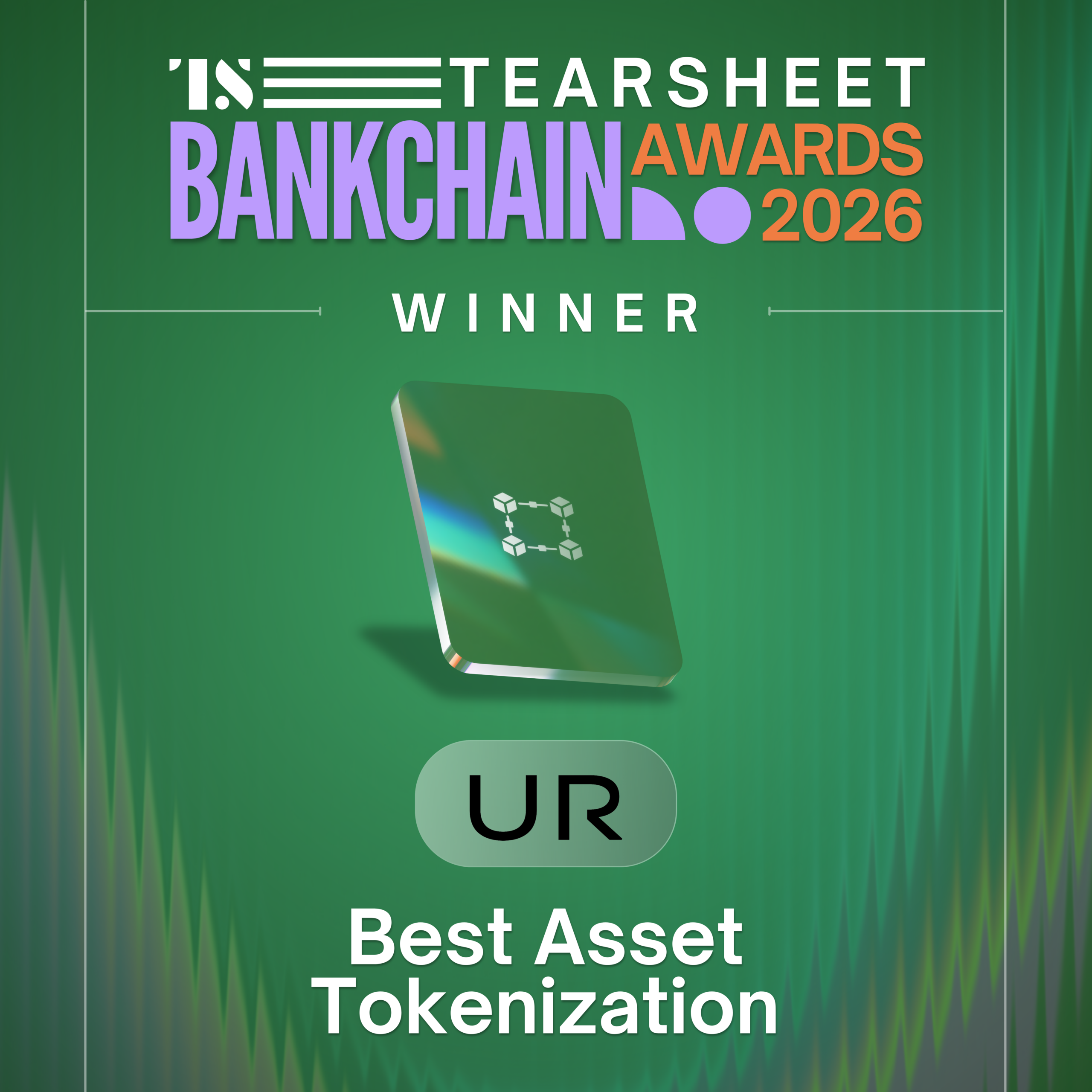
UR Technology receives the Best Asset Tokenization Award for its role in building the technical infrastructure that allows users to have access to tokenized deposits, which serve as a practical bridge between onchain finance and everyday financial activity. UR’s value lies in empowering an open economy, drawing connections between blockchain technology and traditional finance for everyone globally. It operates as a technology integration layer, connecting third‑party financial service providers with blockchain and traditional payment rails. Through these back‑to‑back integrations, the tokenized representation of seven major fiat currencies, each backed 1:1 by client top-up held in regulated Swiss IBAN accounts, can be used by users to seamlessly move cross-border, foreign exchange, and spend-using cards for everyday use. This model has gained meaningful traction, with the underlying ecosystem processing over $1.2 billion in volume and more than 5 million Mastercard transactions across 240,000 verified users in more than 50 countries. By integrating regulated financial products with global payment capabilities, UR expands the practical utility of digital assets in everyday finance.

Best Stablecoin Offering: PYUSD PayPal

PayPal stands out as the recipient of the Best Stablecoin Offering Award, a complementary recognition for PYUSD, which combines regulated 1:1 dollar backing, strong compliance standards, and expanding real-world utility across payments, settlement, and cross-border flows. Now available across 70 markets, PYUSD can be bought, held, sent, and converted within PayPal, moved across Venmo, external wallets, and multiple blockchains, and used for payments at PayPal checkout, where merchants gain faster access to funds. Its growing role in Xoom-enabled cross-border transfers is helping reduce settlement friction and dependence on traditional banking hours, while early integrations with payout partners in regions such as Africa and Asia-Pacific extend its reach into real-world remittance corridors. With optional rewards for holding, improving liquidity, and increasing use across consumer, merchant, and settlement flows, PYUSD is steadily positioning itself as a compliant, interoperable dollar-native stable value layer embedded within everyday global commerce.

Best Custodian: Anchorage Digital

Anchorage Digital is selected for the Best Custodian Award as a complimentary recognition for defining institutional-grade digital asset custody through federally chartered, security-first infrastructure that unifies crypto and fiat within a single regulated platform. As the first OCC-chartered crypto-native bank, it combines qualified custody, segregated key management, biometric and quorum-based approvals, insurance protection, and SOC-certified auditability to ensure both control and compliance at scale, while enabling fast, API-driven settlement and transparent reporting for institutional workflows. Beyond custody, Anchorage has expanded into a broader regulated financial layer — integrating fiat banking, global wires, staking, trading, and settlement — while advancing high-profile initiatives such as partnerships with BNY, Google Cloud, and Western Union’s USDPT issuance, positioning it as a core infrastructure provider bridging traditional finance and onchain markets.

Best Crypto Payments Infrastructure: WalletConnect Pay
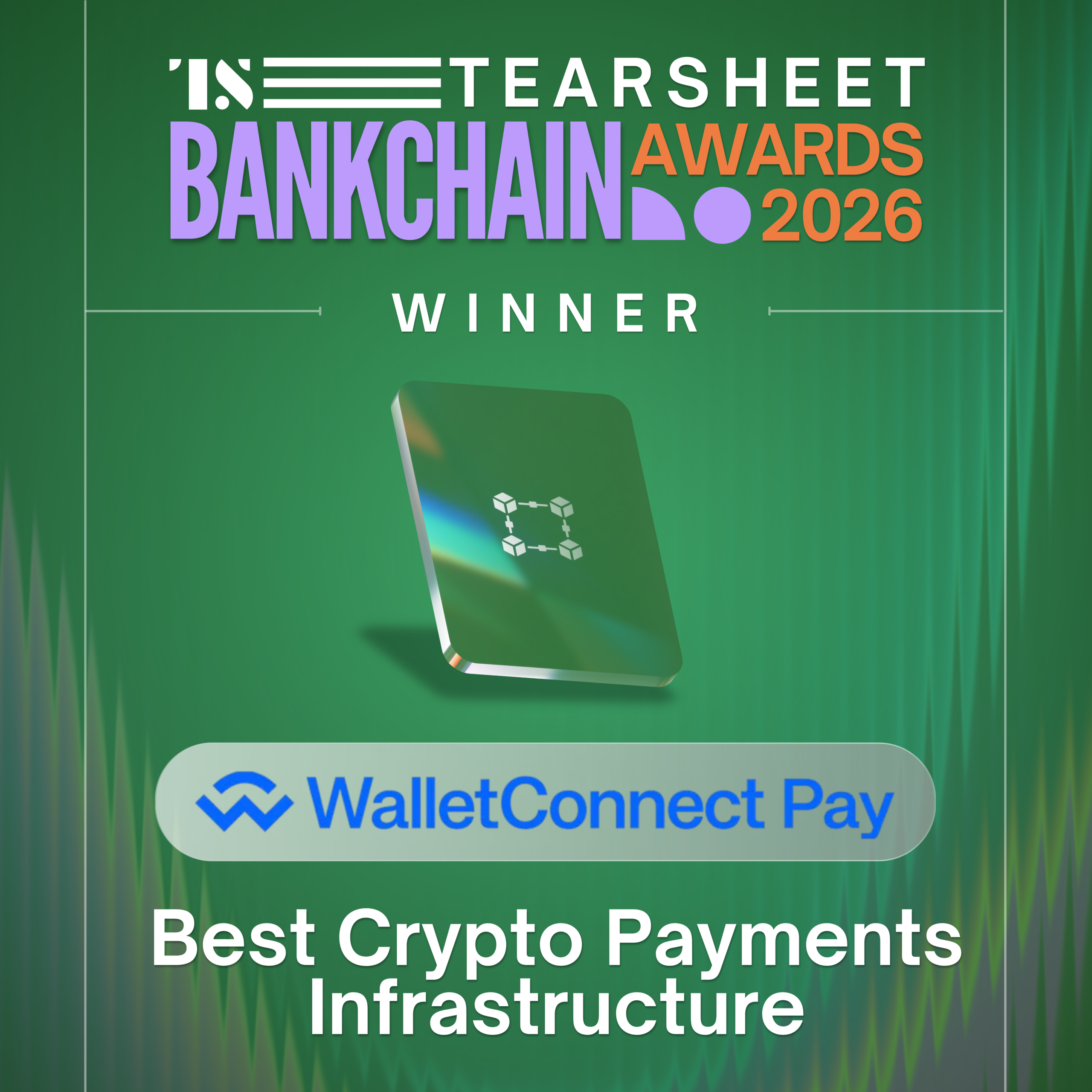
WalletConnect Pay is named the Best Crypto Payments Infrastructure Award as a complimentary recognition for bringing stablecoin payments into physical retail at scale through a wallet-native checkout layer. Integrated with Ingenico’s global POS network, it enables customers to pay in stablecoins directly from their existing mobile wallets while merchants receive settlement through their usual payment providers without new hardware, card networks, or workflow changes. By embedding compliance, identity, and transaction logic into the wallet experience, it removes blockchain complexity at the point of sale and makes crypto acceptance feel identical to traditional card payments. With expanding POS integrations and support for networks like Solana, WalletConnect Pay is positioning stablecoin payments as an embedded, behind-the-scenes layer of everyday commerce infrastructure.

What Klarna, Coinbase, and Chase are building next


    Weekly 10-Q

    The weekly 10-Q newsletter is part of the Tearsheet Pro subscription, where I unpack the recent moves and strategies of leading banks and fintechs in the public space, coupled with stock market analysis. In your inbox every Friday!

    Message Sara


    What Klarna, Coinbase, and Chase are building next

    Klarna, Coinbase, and Chase and the business of moving closer to the customer.


    This week saw Klarna move deeper into deposits, Coinbase using stablecoins to re-engineer credit access, and Chase building intelligence layers around small business decision-making. 

    These moves offer a snapshot of how financial firms are searching for growth beyond the boundaries that originally defined them.

    Klarna: Turning spending behavior into a deposit engine

    Klarna has launched a US high-yield savings account in its app. This is the next step in a longer shift of treating spending and saving as a single behavioral system.

    The accounts -– FDIC-insured through WebBank, with no minimums, no fees, and yields above 3% APY -– place Klarna directly inside the deposit economy. “The average American earns less than half a percent on their savings, not because better options don’t exist, but because their bank hasn’t had to compete,” said Sebastian Siemiatkowski, CEO and co-founder of Klarna.


    subscription wall for TS Pro

    The Week in Market Moves | May 28-June 4, 2026


    Company signals and market response

    This analysis tracks the top company developments and how markets absorbed them through Thursday’s close, focusing on where shifting narratives translate into price action.

    It is part of Tearsheet PRO’s weekly 10-Q Newsletter, where strategy meets market reaction. I track how leading banks and fintechs are evolving in public markets and how investors are pricing those moves.

    Subscribe to PRO and get the full 10-Q story every Friday!


    1. Wise (WSE) – Close: $11.05

    • Wise is under investigation in Belgium over suspected AML lapses tied to cross-border flows totaling roughly €500M.
    • The probe follows earlier regulatory pressure in Europe and past remediation efforts across its AML and compliance systems.

    Why it matters: This goes to the core of what scaled cross-border fintech looks like under regulatory stress. As transaction volumes grow and geographies expand, the AML surface area expands with it.

    For Wise, the issue is less about whether it has controls in place and more about whether those controls can keep pace with increasingly fragmented enforcement regimes across jurisdictions.

    It also underscores a broader reality for cross-border players: speed and scale are only as durable as the compliance architecture underneath them.

    2. SoFi (SOFI) – Close: $16.92

    • SoFi introduced an AI-powered financial coach that aggregates data across over 12,000 institutions to provide personalized guidance.
    • Early testing shows 70% of engaged users took financial actions such as debt repayment or account optimization.

    Why it matters: This move pushes SoFi beyond being a multi-product financial app into a decision-making layer across a user’s entire financial life. The key shift is scope.

    By pulling in external financial data, SoFi is effectively positioning itself as the interpretive layer over fragmented financial behavior. That creates a stronger feedback loop between insight, recommendation, and action than product bundling alone ever could.

    3. Affirm (AFRM) – Close: $68.57

    • Affirm and Stripe expanded their partnership to bring BNPL capabilities to UK merchants using Stripe.
    • The collaboration also includes joint work on AI-powered commerce and tokenized, pay-over-time checkout experiences.

    Why it matters: This move is about checkout becoming a programmable decision layer. Payments are becoming adaptive financial choices embedded in commerce flows.

    Stripe continues to position itself as the orchestration layer for merchant payments, while Affirm plugs into that layer at the point of consumer decision.

    4. LendingClub (LC) – Close: $17.28

    • LendingClub is shifting its listing to Nasdaq alongside a rebrand to “Happen Bank” as it evolves into a broader digital-first bank.
    • The company is repositioning beyond lending into deposits, marketplace finance, and a more diversified banking model.

    Why it matters: The rebrand reflects LendingClub’s structural identity shift from product company to full-stack financial institution.

    Moving to Nasdaq aligns with its repositioning toward a more tech-forward narrative, but the real change is architectural. LendingClub is effectively trying to escape its original constraint as a lender and reframe itself as a system for financial activity rather than a single product.

    5. Bank of America (BAC) – Close: $54.07

    • Bank of America is launching a real-time cross-border payments solution integrated with SWIFT and its CashPro platform.
    • The system connects multiple global instant payment networks, including UPI, Faster Payments, and SPEI.

    Why it matters: This is a traditional bank directly responding to the real-time expectations set by fintech and payment networks. The move is about compressing settlement latency across jurisdictions while maintaining institutional control.

    The key shift is interoperability, connecting fragmented domestic instant payment systems into a unified corporate experience layer.

    SoFi bets the future of finance is fewer handoffs


      Weekly 10-Q

      The weekly 10-Q newsletter is part of the Tearsheet Pro subscription, where I unpack the recent moves and strategies of leading banks and fintechs in the public space, coupled with stock market analysis. In your inbox every Friday!

      Message Sara


      SoFi bets the future of finance is fewer handoffs

      SoFi’s new playbook: Own the customer, own the infrastructure, own the money movement


      The last ten years saw financial services steadily unbundle. Specialists emerged for lending, investing, payments, banking infrastructure, financial planning, and compliance. As a result, consumers gained more choice, and financial institutions gained more vendors. But the result was also more fragmentation. Money moved through multiple systems, customer information was stored in multiple databases, and financial decisions were made without a complete picture.

      SoFi’s string of announcements between May and June suggests the company sees the next phase differently. In less than a month, it acquired assets from capital markets platform PrimaryBid, bought loan servicing software provider Peach Finance, expanded access to its stablecoin SoFiUSD, hired payments veteran Kathleen Pierce-Gilmore to lead its technology business, and launched an AI-powered financial coach.

      These developments point to the firm’s broader attempt to reduce the number of handoffs between financial products, systems, and decisions.

      From products to systems

      SoFi started as a consumer products company, scaling from student loans into banking, investing, and credit cards through its single integrated financial platform.


      subscription wall for TS Pro

      How money movement is becoming one continuous system

      This month began with two key developments in crypto and payments: Binance listing stocks and ETFs on its trading platform, and MoneyGram introducing a new US dollar-backed stablecoin.

      Binance and the push to collapse financial silos

      Crypto trading platforms and stock brokerages were designed as separate systems. One focused on digital assets, the other on regulated securities, with users expected to move between them.

      Binance is now testing a different assumption: users no longer think in asset classes.

      On June 1, the company began rolling out access to more than 7,000 US stocks and ETFs directly within its app, extending a platform that was once almost entirely crypto-focused into traditional equities. The pitch is consolidation. “Today’s users don’t think in silos,” the firm said in its announcement.

      The move mirrors a broader industry shift. Coinbase has also been building toward an “everything exchange” model, while infrastructure players and regulators are slowly opening the door to testing tokenized versions of traditional securities.

      Binance is going a step further with “bStocks,” planned tokenized representations of equities that would allow users to move between traditional shares and on-chain assets. The idea is to bring financial systems closer together.

      Regulators are still working through the framework. The U.S. Securities and Exchange Commission is evaluating tokenized securities structures, while institutions such as the Depository Trust & Clearing Corporation, which custodies over $114 trillion in assets, are preparing early-stage tokenization pilots for real-world assets later this year.

      What emerges from all of this is a structural question: if assets can move freely between crypto rails and traditional markets, does the distinction between the two still hold?

      Binance is of the view that for most users, it already doesn’t.

      MoneyGram and the shift from transfers to programmable dollars

      Sending money across borders has been defined by trade-offs: cost, speed, and access have rarely improved at the same time. Even as digital tools have reduced some friction and improved the experience at the margins, the underlying model of intermediaries and conversion layers has remained largely unchanged.

      MoneyGram is now attempting to reshape that foundation. With the launch of MGUSD, its new dollar-backed stablecoin, the company is moving beyond payments into what it describes as a “stable, dollar-denominated balance” that can be held, moved, and converted globally. The aim is to serve individuals in economies where currency instability, inflation pressure, or limited banking reach make financial predictability difficult.

      The structure behind MGUSD is intentionally layered. Bridge handles issuance, M0 provides smart contract infrastructure, Stellar supports blockchain settlement, and Fireblocks enables custody and transfer within MoneyGram’s existing distribution network. It is a coordinated stack built around distribution.

      Instead of starting with assets and searching for use cases, MoneyGram is starting with its global remittance network and layering stablecoin functionality into it.

      That approach comes at a time when institutional confidence in digital assets is still uneven. Research continues to show that most finance leaders hesitate due to regulatory ambiguity and concerns around control, even as interest in stablecoins grows for payments use cases.

      The hesitation stems from how these systems will behave when they move from experimentation to core financial infrastructure.

      MoneyGram believes that embedding stablecoins within a regulated, widely used distribution network removes that uncertainty, turning what is still seen as crypto infrastructure into underlying financial infrastructure.

      The Week in Market Moves | May 21-28, 2026


      Company signals and market response

      This analysis tracks the top company developments and how markets absorbed them through Thursday’s close, focusing on where shifting narratives translate into price action.

      It is part of Tearsheet PRO’s weekly 10-Q Newsletter, where strategy meets market reaction. I track how leading banks and fintechs are evolving in public markets and how investors are pricing those moves.

      Subscribe to PRO and get the full 10-Q story every Friday!


      1. Mastercard (MA) – Close: $493.75

      • Mastercard is asking Brazilian processors to share half the losses tied to Banco Master’s collapse and Will Financeira’s card portfolio exposure.
      • The dispute sits at the intersection of new central bank liability rules and legacy card-network risk allocation during issuer failure.

      Why it matters: Mastercard is testing how far network liability can extend when an issuer fails mid-transition in a tightening regulatory regime. Banco Master is a Brazilian bank that grew rapidly through high-yield debt funding and later faced cash flow stress, leading to its collapse and liquidation. The Banco Master collapse exposed ambiguity over who absorbs systemic fallout in card ecosystems.

      Brazil’s central bank has already shifted more responsibility onto payment networks for settlement guarantees, but Mastercard is pushing back on retroactive interpretation of those rules. The standoff signals a broader fault line: as regulators push for guaranteed settlement finality, networks are being forced to rethink how risk is distributed across issuers, acquirers, and schemes.

      If unresolved, this becomes less about one failed fintech and more about how payment networks price and structure systemic risk in emerging markets.

      2. Circle (CRCL) – Close: $108.24

      • Circle co-founder Sean Neville’s Catena Labs raised $30M and received OCC acceptance for a national trust bank charter application.
      • The company is building an “AI-native financial institution” designed for agent-driven transactions with embedded controls and policy layers.

      Why it matters: Circle co-founder Sean Neville is now rebuilding the financial stack around AI agents. His new venture, Catena Labs, is an AI-native financial infrastructure startup positioning agents as the primary actors in moving money, with humans acting as supervisors rather than initiators. This extends his earlier work in stablecoin-based payments into regulated banking rails designed for agent-driven finance.

      The key shift is architectural: agents get wallets, balances, and payment rails, while humans get a “control plane” to set constraints, approvals, and limits. That separation signals where the industry is heading, away from human-initiated transactions and toward delegated economic activity executed by software.

      If this model scales, the core battleground in financial services shifts from UX and apps to governance infrastructure: how much autonomy AI agents are allowed to have, and who controls the boundaries of that autonomy.

      3. Robinhood (HOOD) – Close: $84.84

      • Robinhood received Canadian regulatory approval for its acquisition of WonderFi, deepening its crypto infrastructure footprint.
      • The deal complements earlier acquisitions like Bitstamp as Robinhood expands custody, compliance, and trading infrastructure.

      Why it matters: Robinhood is rebuilding itself as a multi-layer financial platform spanning brokerage, crypto infrastructure, and emerging market-style financial products.

      Crypto trading revenue has fallen sharply, down roughly 47% year-over-year, but that decline is being offset by subscription products, prediction markets, and derivatives-linked activity. The WonderFi acquisition announced in 2024 extends this shift by adding regulated Canadian crypto rails, staking, and custody capabilities.

      The broader signal is structural repositioning: Robinhood is moving from a single-product brokerage dependent on trading volatility to a platform that combines investing, speculation, and infrastructure ownership. In that model, trading becomes one of several monetization layers inside a broader financial ecosystem.

      May’s public fintech theme: Operating systems over products


        Weekly 10-Q

        The weekly 10-Q newsletter is part of the Tearsheet Pro subscription, where I unpack the recent moves and strategies of leading banks and fintechs in the public space, coupled with stock market analysis. In your inbox every Friday!

        Message Sara


        May’s public fintech theme: Operating systems over products

        Firms are pushing closer to the decision layer where financial actions are executed.


        May showed that companies are tightening control over the infrastructure that runs financial systems, including coordination, decisioning, workflows, and the underlying data layers.

        Across Coinbase, LendingClub, Green Dot, Citi, and Intuit, the details differ. The direction doesn’t. Each firm is moving one layer down the stack, closer to where financial decisions are actually made and executed.

        1. Coinbase: Still trading-led, increasingly infrastructure-shaped

        Coinbase is building toward an “everything exchange,” but its business is still defined in real time by trading.

        Q4 2025 (reported February 2026) made that clear: revenue of $1.78B, down 22% year over year, and a $666M net loss tied to weaker trading activity. Yet subscription and services revenue held up at $727M, driven by custody, stablecoins, and institutional products.

        Two engines are now visible:

        • Trading: volatility, upside/downside driver
        • Subscriptions and infrastructure: baseline, recurring layer

        CEO Brian Armstrong called Coinbase in “pole position” for 2026. Structurally, it is still a volatility-priced company building a stability engine underneath it.

        2. LendingClub: The business changed first, the name followed


        subscription wall for TS Pro

        The uneven geography of modern finance: AI, branches, and BNPL

          Financial firms are choosing to anchor themselves before, during, or after a transaction.


          This week didn’t offer a single storyline to hang everything on. Instead, it gave us three companies moving in completely different directions, signaling how far financial services has drifted from any shared playbook.

          PayPal is trying to teach small businesses how to use AI. Chase is opening more branches in an era defined by digital banking. And Klarna is turning payments into more of a daily habit loop.

          It all comes down to: how do you stay relevant when the way people interact with money is shifting faster than the institutions themselves?

          PayPal wants AI to stop feeling like AI

          PayPal and Anthropic have partnered to help small businesses adopt AI, including training and workflow integration. 

          PayPal is no longer confined to the checkout flow; through its integration with Anthropic’s Claude, it is moving closer to SMB workflows where transactions are initiated and executed. In effect, it is extending from a payments layer into the operational layer around business activity.


          subscription wall for TS Pro

          The Week in Market Moves | May 14–21, 2026


          Company signals and market response

          This analysis tracks the top 5 company developments and how markets absorbed them through Thursday’s close, focusing on where shifting narratives translate into price action.

          It is part of Tearsheet PRO’s weekly 10-Q Newsletter, where strategy meets market reaction. I track how leading banks and fintechs are evolving in public markets and how investors are pricing those moves.

          Subscribe to PRO and get the full 10-Q story every Friday!


          1. Klarna (KLAR) – Close: $15.93

          • Klarna is embedding itself directly into Worldline’s acquiring and merchant infrastructure, starting with e-commerce and eventually extending into in-store POS systems across Europe.
          • The partnership gives Klarna distribution through one of Europe’s largest payment acceptance networks at a time when BNPL usage is expanding beyond discretionary purchases into everyday cash flow management.
          • Klarna launched a shopping app inside ChatGPT that lets users search products, compare prices and check live inventory without leaving the conversation.
          • The move pushes Klarna upstream from payments into product discovery, where purchase decisions increasingly begin inside AI interfaces rather than search engines or retailer apps.

          Why it matters: This move is less about adding another payment button and more about distribution power. Klarna is moving from being a checkout feature into core payments infrastructure. By integrating deeper into Worldline’s stack, Klarna becomes easier for merchants to activate and harder to ignore. The timing matters too. BNPL is increasingly functioning as a short-term cash flow tool for younger consumers. Klarna understands that the winner in BNPL may not be the firm with the best consumer app, but the one most deeply wired into merchant systems and transaction flows.

          Klarna is positioning itself for a world where commerce starts with conversation instead of browsing. If consumers begin asking AI what to buy, the firms controlling that discovery layer gain influence long before checkout happens. What’s interesting is that Klarna is no longer waiting at the payment stage. It wants to sit at the moment of intent formation, when shoppers compare, evaluate, and narrow choices. That changes Klarna’s role from transaction processor to commerce intermediary. In AI-driven retail, discovery may become as valuable as payments themselves.

          2. Intuit (INTU) – Close: $307.07

          • Intuit is cutting roughly 17% of its workforce while redirecting resources toward generative AI infrastructure and product integration.
          • The company is simultaneously restructuring around AI-powered services rather than standalone software tools, supported by partnerships with Anthropic and OpenAI.

          Why it matters: This is not just a cost-cutting story. It reflects a deeper shift in how software companies think about value creation. Traditional SaaS products were built around menus, workflows, and manual inputs. AI changes that model entirely.

          Intuit envisions that accounting, tax, and SMB operations will increasingly run through AI-led orchestration rather than conventional software navigation. The layoffs signal how aggressively firms are willing to reorganize themselves around that assumption even before the long-term economics are fully proven.

          3. NVIDIA (NVDA) – Close: $219.51

          • NVIDIA reported a record $82 billion in revenue for the first quarter of FY2027, which corresponds to the quarter ending around April 2026, as demand surged for infrastructure powering agentic AI systems capable of executing tasks. 
          • The company introduced a clearer distinction between AI reasoning infrastructure and AI execution infrastructure, positioning new chips like Vera around task completion economics rather than raw compute rental.

          Why it matters: The important shift here is that AI infrastructure is becoming tied to staffing replacement economics. Earlier AI waves mostly enhanced software features. Agentic AI is being sold as operational capacity; systems that can investigate, execute, and complete workflows with minimal human involvement.

          That changes the spending logic. Businesses no longer view AI compute as experimental R&D spending. They increasingly view it as infrastructure directly tied to productivity and cost savings. NVIDIA is effectively becoming the industrial backbone for automated digital staffing.

          4. American Express (AXP) – Close: $309.70

          • American Express and Fanatics are launching a co-branded sports rewards card tied to FanCash, collectibles, tickets, and fan experiences.
          • Fanatics will also become Amex’s first sports-focused Membership Rewards transfer partner, linking payments directly into a broader sports commerce ecosystem.

          Why it matters: This deal shows how rewards programs are evolving from generic cashback structures into identity-driven ecosystems. Sports fandom already produces recurring spending behavior, emotional loyalty, and community participation. Payments firms increasingly want to sit inside those engagement loops.

          For Amex, the card is less about transactions alone and more about relevance. The goal is to turn spending into participation, where rewards are connected to experiences, access and belonging rather than points accumulation. Fanatics, meanwhile, gets another mechanism to keep users circulating inside its ecosystem longer.

          5. J.P. Morgan Chase (JPM) – Close: $303

          • Jamie Dimon said J.P. Morgan could eventually hire more AI specialists than traditional bankers as automation reshapes parts of the bank.
          • The firm is already deploying AI tools across investment banking workflows and cybersecurity operations while relying on natural attrition to gradually rebalance its workforce.

          Why it matters: Banks are moving beyond experimenting with AI and starting to redesign organizational structures around it. What J.P. Morgan is describing is not simply productivity software layered onto existing jobs. It is a gradual reallocation of staff toward technical and AI-operational roles.

          Dimon’s vision is notable because it is more pragmatic than the “AI replaces everyone” rhetoric circulating elsewhere in banking. But the direction is still clear: future financial institutions may compete less on headcount scale and more on how effectively they combine domain expertise with machine-driven execution.

          Stablecoins and wallets are being redesigned for systems where humans are no longer the primary users

          What happens when money no longer moves between people at all?

          The next wave of demand for crypto-native payments and settlement infrastructure does not come from retail users or even institutions. It comes from AI agents that can initiate, route, and execute transactions on their own. That shift is pulling two of the sector’s most important crypto infrastructure players, Circle and Coinbase, toward the same conclusion. Both now believe that AI agents will become economic actors in their own right.

          They are building different layers of the same emerging stack. One is building programmable digital money for AI agents. The other is building the wallets and transaction rails that those agents will use.

          Case 1: Circle and the push to make money machine-readable

          Circle is creating the underlying infrastructure for AI agents. It is doing this through its Agent Stack, a set of infrastructure tools designed for machine-native commerce. It includes programmable wallets, micropayment rails, and transaction capabilities that allow value transfers at extremely small increments, down to fractions of a cent.

          The design reflects a simple constraint. AI agents will not behave like humans. They will not bundle payments, wait for approval cycles, or operate within predictable billing rhythms. Instead, they will generate continuous streams of low-value interactions across APIs, data services, and automated systems.

          Traditional payment rails struggle with that model because they are built for human behavior. 

          Circle is building for a different cadence entirely. The firm is pushing value transfer closer to computation speed. In this model, USDC stops behaving like a digital dollar for people and starts functioning as a unit of value that software systems can execute against in real time, embedded directly into workflows rather than layered on top of them.

          The aim is to make digitized money readable and spendable by machines operating at their own speed.

          Case 2: Coinbase and the infrastructure for autonomous spending

          Coinbase approaches the same transition from a different layer of the stack. Instead of redefining money, it focuses on redefining access to it.

          The company already operates a widely used crypto wallet product, but it is now extending that infrastructure for AI agents that need to hold and spend value under tightly controlled conditions. These wallets allow agents to transact in stablecoins such as USDC, but only within predefined boundaries set by users or institutions. Those boundaries include session-level caps, per-transaction limits, and programmable rules that define what an agent can and cannot do. The intent is to formalize autonomy within software-defined guardrails.

          Coinbase connects this architecture to broader machine-to-machine payment rails, including protocols such as x402, which enable automated payments for APIs, digital services, and content access.

          The design avoids forcing AI agents into banking systems built around identity verification and human accountability. Instead, it treats them as constrained participants in financial systems, with permissions defined in code rather than identity documents.

          That shift repositions the wallet from a human-centric financial tool into a programmable execution layer for autonomous transactions.

          But it also introduces a harder question that the industry has not fully resolved. Financial systems assume accountability sits with a person or institution. When agents act independently, that assumption becomes harder to enforce in real time, especially as transaction volume and complexity scale.

          This is already starting to surface in adjacent parts of financial services. American Express, for instance, has begun exploring this risk surface through its newly launched Agentic Commerce Experiences (ACE) Developer Kit. It introduces what the firm calls an “industry-first” commitment to protecting card members from charges linked to AI agent errors, provided the agent is registered and the user authenticates intent. This comes as agentic systems begin to participate in financial decision-making flows.

          Coinbase is building on the belief that the next phase of crypto will be driven by infrastructure that allows software itself to participate directly in transactional activities.

          The emerging stack beneath both approaches

          Circle and Coinbase are building adjacent layers of a shared system. Between them sits a broader reconfiguration of financial infrastructure, where software is starting to initiate and execute transactions instead of human actors.

          This is the early shape of what some in the industry are beginning to describe as an agentic economy, a system in which AI agents become active participants in financial flows rather than passive analytical tools sitting on top of them.

          Stablecoins sit at the center of this shift because they offer what traditional rails struggle to provide at scale: programmable, always-on settlement that can operate without human timing or institutional settlement windows. 

          But the implications extend beyond payments. These moves point to a financial system where interaction, execution, and settlement collapse into a single layer of software logic. The core design question then becomes how much of finance should be designed for non-human participants from the outset.