Wealth management follows a familiar rhythm where advisors book meetings in advance, send market notes after the fact, and make decisions that move at the speed of inboxes and calendars.
Citi Wealth is aiming to break that cadence with Citi Sky, built in partnership with Google Cloud and Google DeepMind. The bank describes it as an always-on AI-powered member of the Citi Wealth team that can talk, respond, and surface insights in real time.
Citi’s Head of Wealth, Andy Sieg, says the intent is to move away from the fragmented experience clients have lived with for years. “For decades, managing your financial life meant navigating apps, calls, and meetings,” he said in a press release. “With Citi Sky, you simply ask – and act. This is the shift from interface to intelligence, from transactions to outcomes.”
The Citi-Google Cloud relationship extends beyond a typical vendor arrangement. While Google provides the underlying infrastructure and AI stack, the collaboration evolved into a deeper co-development effort. Teams from Google Cloud and Google DeepMind worked alongside Citi engineers to shape Citi Sky’s architecture, conversational experience, and guardrails, while Citi retains ownership of the client experience, data, and decisioning layer.
From infrastructure modernization to client-facing intelligence
…
JP Suh, Product Manager at Google DeepMind
Karolina Belwal, Citi’s Global Head of Data Intelligence and Automation for Wealth
Rohit Bhat, Managing Director of Financial Services at Google Cloud
In January 2026, U.S. Bank announced the launch of a generative AI assistant on its developer portal to accelerate and improve partner API integrations. Just last week, the bank closed its deal for Amazon’s small-business credit card portfolio – viewed internally as both a portfolio expansion and a way to reach more SMBs. Around the same time, it also extended home-improvement loan terms in a calculated response to mounting affordability pressures.
These actions show how the Minneapolis-based lender is reorganizing itself around a methodical strategy focused on how quickly it can integrate, how intelligently it can respond, and how deeply it can embed itself in the systems where financial decisions are made.
In tandem, these moves form a closed-loop operating model where integration fuels usage, usage produces data, and that data perpetually refines products in near real time.
Breaking the Code: Turning integration into distribution
U.S. Bank rolled out its generative AI assistant for developers in October 2025, before formally surfacing it publicly in early 2026.
This launch is the clearest entry point into the bank’s systematic plan. On the surface, the tool solves a familiar problem: APIs are powerful but often complex, and integration can take weeks or months depending on the use case. By guiding developers through implementation, troubleshooting errors, and recommending best practices, the AI assistant materially reduces that friction. The bank says the AI assistant can reduce API integration timelines by an average of weeks, helping partners go live faster.
But the more important shift is not speed alone; it’s where distribution happens.
In traditional banking, distribution is relationship-driven: sales teams, partnerships, and channel expansion determine adoption. In an API economy, distribution shifts upstream. The bank that is easiest to integrate can become the one most likely to be embedded by default. In that context, the developer portal acts as the front door to U.S. Bank’s embedded finance strategy.
The relationship between clients and banks has been structured around a destination model, where businesses log in, navigate dashboards, export data, and piece together insights.
Grasshopper is working to dismantle that model.
In August 2025, the digital bank launched its Model Context Protocol (MCP) server in partnership with enterprise-grade digital banking solutions provider Narmi to address a specific challenge: enabling clients to use modern AI tools with their financial data without compromising banking security and control standards.
Nate Gruendemann, Director of Product at Grasshopper
“We learned people were uploading their bank statements or transaction files to their [external] AI of choice to run AI-analysis on their finances,” says Nate Gruendemann, Director of Product at Grasshopper. “MCP technology is how we close that gap.”
Technically, MCP sits between Grasshopper’s core banking systems and external AI models, managing authentication, permissions, and data structuring before any client-specific bank data reaches the AI model (e.g., Claude or ChatGPT).
“In practice, this allows us to expose meaningful financial context while keeping the core banking system insulated,” notes Gruendemann.
But the key design choice lies in what MCP doesn’t allow. The system is built on the assumption that AI models are untrusted environments. MCP is fully opt-in, which means clients must authorize Claude or ChatGPT and authenticate with their banking credentials. The server can see only the data the user is permitted to access, and the entire system is currently read-only. This means AI tools and platforms can analyze information, but cannot act on it independently. For example, they cannot initiate transactions or modify account data.
“We secure the banking infrastructure and access layer, while clients maintain control over how they use their chosen AI tools,” adds Gruendemann.
This indicates Grasshopper isn’t focused on owning the user experience, but on controlling the underlying data layer that powers it.
The rationale behind building a user-facing layer outside the core banking system
There’s a tension at the heart of modern banking that technology doesn’t seem to totally resolve: how do you be both digitally excellent and deeply human at the same time? Most banks have picked a lane: either betting on digital efficiency or doubling down on relationship banking. But consumers aren’t asking for one or the other. They want both. They want their banking app to work flawlessly when they need it, and they want someone who actually knows them when it matters.
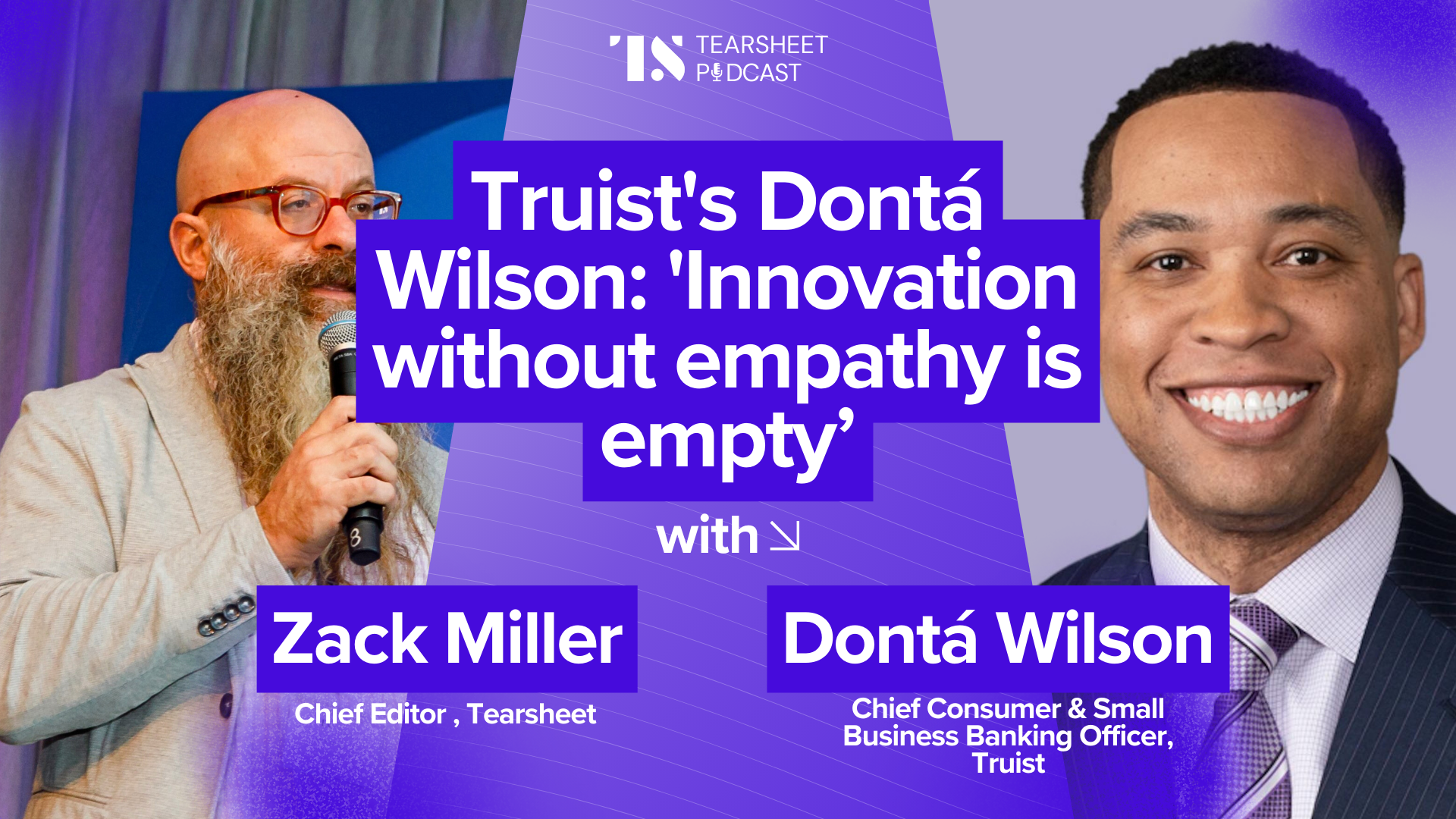
My guest today is Dontá Wilson, Truist’s Chief Consumer and Small Business Banking Officer. He leads 20,000 teammates serving clients through both digital channels and more than 1,900 community banking branches. His portfolio spans core deposits and loans to mortgage, auto, credit cards, and the full stack of consumer products. He also oversees Truist’s multi-year growth plan that’s reimagining both their digital experience and their physical branches using insights and AI.
We talked about how AI is redefining consumer expectations and trust, what it takes to innovate inside a highly regulated industry while keeping client purpose at the center, and why Dontá believes innovation without empathy is empty.
We’ve been covering AI in financial services for a while now—chatbots, generative AI, fraud detection models. But something fundamental is shifting. We’re moving beyond AI as a tool that assists humans to AI as an actor that takes action on our behalf.
Agentic AI is no longer a research project. It’s live. Capital One has AI agents helping consumers buy cars. Visa is letting AI agents spend your money. RBC has agents executing trades, learning and adapting in real-time to market conditions.
It’s already here. The question is: what does it take to make this work at scale? What infrastructure do you need when an AI agent is handling real financial transactions at 2 AM? How do you architect for reliability when there’s no human in the loop?
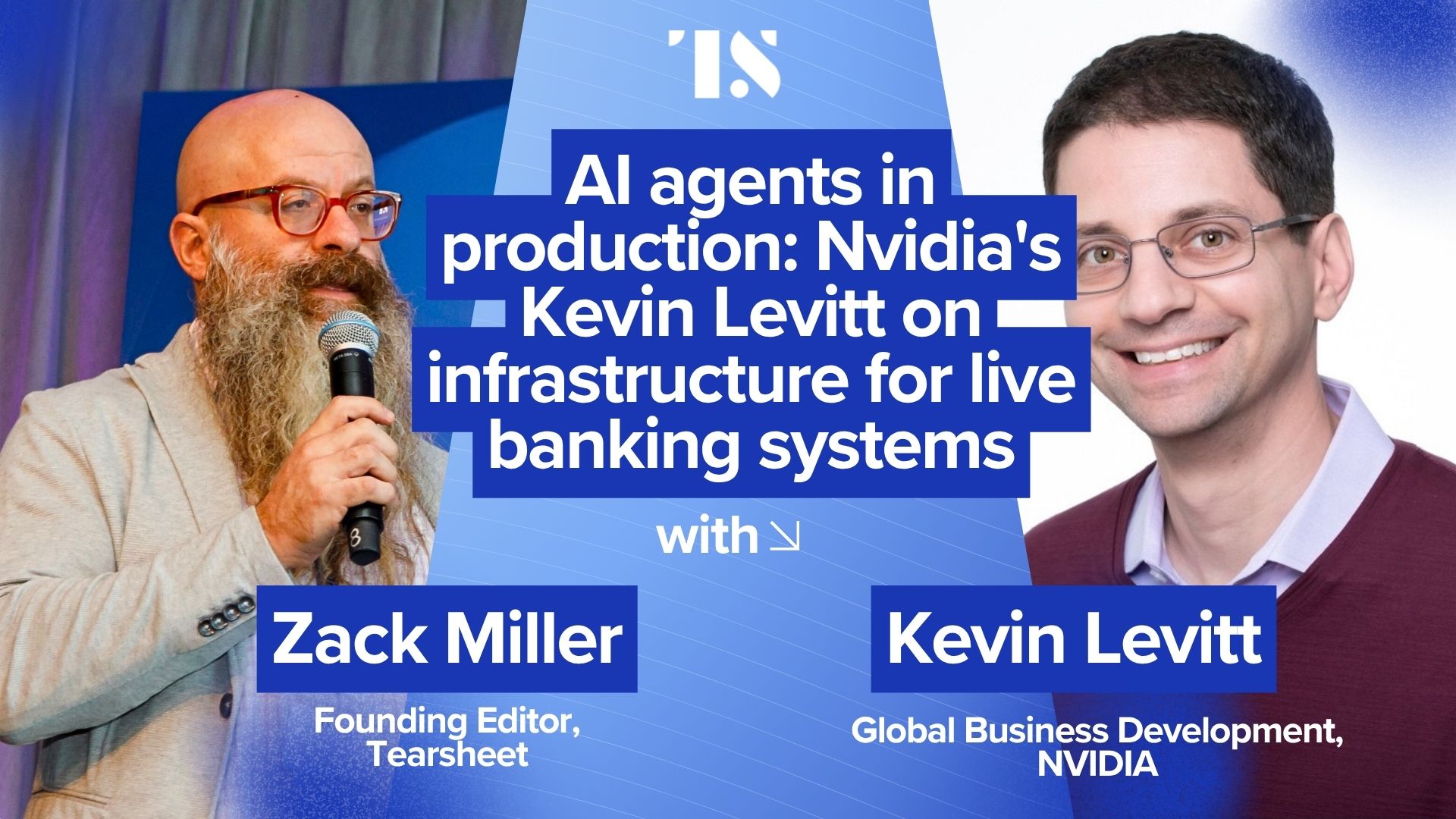
My guest today is Kevin Levitt, who leads global business development for financial services at Nvidia. Before Nvidia, Kevin spent years inside fintechs like Credit Karma and Roostify. At Nvidia, he’s working with firms like Capital One, Visa, and RBC as they deploy agentic AI in production—not pilot programs, actual live systems processing real transactions.
We’re digging into the case studies, the computational demands of multi-agent systems, the security challenges when agents control money, and what financial institutions need to think about now.
NVIDIA’s Kevin Levitt is my guest today on the podcast.
Generative AI and open banking are beginning to change how banks engage with customers. Today we will look at this process with Olly Downs. He is a Chief Technology and AI Officer at Curinos. With a career spanning three waves of AI, Downs brings a wealth of experience to the table. He published his first academic paper on what we now call generative AI, back in 1999. “I’ve almost been waiting for the current wave of AI to join us,” Downs reflects. He highlights the long-anticipated arrival of today’s AI capabilities.
AI-driven personalization will change digital banking. Banks are beginning to use it to recreate the personalized touch of traditional banking. Downs explains, “Traditional banking founded itself on personalized, high-engagement relationships. That followed families and businesses throughout their entire life cycle.” Personalizing the online experience is challenging due to the growth of digital channels. Curinos’ technology tackles this by analyzing customer journeys. It identifies the best times and ways to engage customers. This ensures that personalization continues in the digital space. The result is a more effective and tailored customer experience.
Generative AI is not just boosting personalization. It addresses the entire marketing cycle for banks. This shift is redefining how banks approach customer engagement. It’s enabling and testing tailored interactions with numerous ready-to-use marketing creatives. The impact is both profound and widespread. The blend of personalization with open banking is shaping the future of banking.
1. Evolution of AI in Banking Personalization
Downs traces AI’s progress in banking, from Microsoft Research to today’s generative AI. He notes, “We’ve done so much better in understanding language. And the human internalization of concepts.” This progress has deepened our understanding of customer behavior across different communication channels. It provides a clearer picture of how customers interact, enabling banks to create more personalized experiences. Banks nowadays are focusing on data-driven customer lifecycle management.
2. Bridging the Gap Between Traditional and Digital Banking
Modern banks want to replicate the personalized touch of traditional banking online. This is a major challenge in the digital age. “The most satisfied retail banking customers engage with a branch. As well as digital services,” Downs says. This insight highlights the need for a consistent experience across all channels. AI helps unify customer journeys. It offers context for both digital and in-person interactions. Achieving this consistency is crucial for a seamless customer experience.
3. Generative AI: A Game-Changer for Financial Services Marketing
Generative AI addresses the marketing process for banks. Downs reveals, “We’ve been able to stitch in with the help of generative AI… how can we be experimenting live?” This technology allows for real-time learning and adaptation of marketing strategies. It accelerates the creative process and campaign execution.
4. Future of Open Banking and Personalization
Looking ahead, Downs contemplates the convergence of personalization and open banking. He muses, “There’s an opportunity for thinking about… pricing and packaging, both of deposit and lending products that can become very personal.” Yet, he also notes the potential challenges in data consolidation open banking might present, suggesting a need for consumer-driven solutions.
5. Micro-Personalization: The Next Frontier
The conversation touches on the concept of micro-personalization. It means “personalization for an audience of one.” The goal of personalized banking is to integrate both branch and digital services. Downs notes that open banking trends and data privacy issues make this complex. These challenges make personalization more difficult.
The Big Ideas
AI-driven personalization is reviving traditional banking relationships. Downs highlights, “Traditional banking founded itself on personalized, high-engagement relationships.” He explains how AI is enabling banks to maintain this level of personalization. It is doing this across digital channels.
Generative AI will change financial services marketing. Downs reveals, “It’s a massive unlock. It’s a hundred X unlock of the creative process in particular.” This technology allows for continuous experimentation and rapid adaptation of marketing strategies.
The future of banking lies in the convergence of personalization and open banking. Downs predicts a future where banking products are highly personalized, stating, “There’s an opportunity for thinking about… pricing and packaging, both of deposit and lending products that can become very personal.” Yet, he also acknowledges the challenges that it might present in data consolidation.
Customer engagement is key to long-term value. Downs explains, “The key use case has been about engagement and the path to primacy and maximizing quality of customers.”
AI is enabling real-time learning and adaptation. Downs describes how Curinos technology can “generate new recommended creatives”. It does so in that “flow for the marketing team.” This allows for the immediate implementation of insights gained from customer interactions.