







From AI to Blockchain: Mastering new technology with Mastercard President and CTO, Ed McLaughlin
- Gen AI, blockchain, and quantum computing sit atop a growing list of new technologies FIs are exploring.
- Mastercard's President and CTO, Ed McLaughlin joins us on the podcast to talk about how to size up new technologies and what his firm is doing today to get the best out of new opportunities.
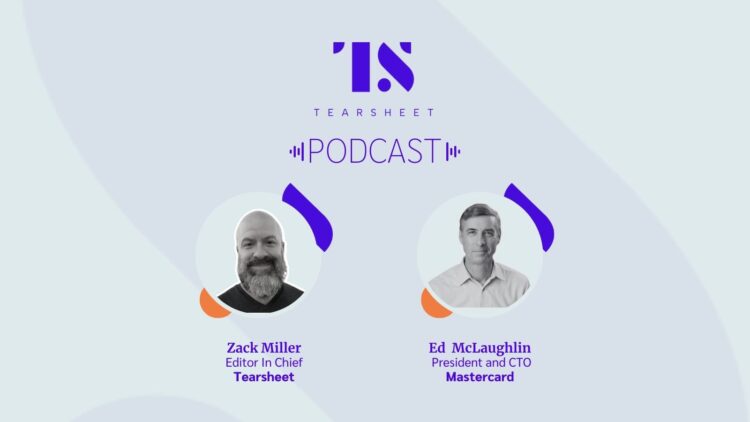
One of the tenets we founded this podcast and everything we do at Tearsheet – our reporting, conferences, awards programs, even our new Working Groups – is honesty. Honesty in what’s really important and impactful to you, our listeners and readers. It’s why we don’t use language like “revolutionary” or “seamless”. This stuff isn’t easy to get right. I’ve been in the rodeo long enough to see fads come and go with no lasting impact. We actually see it as one of our jobs – being able to distinguish wheat from chaff, sizzle from stake – to help you focus on what’s really important and tune out the rest. Remember the hype around chatbots a few years ago? Or crypto? Certainly we weren’t there before, but are we there now? How do we even think about quantum? I’m joined by Mastercard’s president and CTO Ed McLaughlin today. I wanted to ask him what he thinks about three particular trends and sets of technology. Specifically, how do we size up the impact on payments of AI, quantum computing, and crypto? You’ll hear Ed’s deep experience in product and tech and how one of the senior most professionals in financial services can cut through the hype to find opportunity in cutting edge technology, focusing his and Mastercard’s resources on what will be impactful now and in the future. In the course of our conversation, McLaughlin provides some frameworks about how to approach new technology in an honest way and. I appreciate his honesty around his process and his sharing of his impact assessment of new technologies. Here’s my discussion with Mastercard’s Ed McLaughlin.
The big ideas
- Importance of Problem Understanding:
- “One is a really deep understanding of what the problem space is that you’re looking to solve.”
- Evaluation of New Technologies:
- “So when you talk about globally scaled payments, there’s a lot of unique issues there… engage in all new technologies to say, Does this give me an opportunity to do the things I do today better than what I could do before?”
- Caution Against Technology Hype:
- “I would caution against… a new technology comes out, and people are like, What can I use this for? Rather than what are the problems we need to solve?”
- Shift from Rules-Based to Prediction System:
- “Moving from a rules-based system to a pure prediction system… AI is just a big prediction engine.”
- Quantum Computing and Security:
- “I’d say it’s very early days. But it’s really interesting to look at that. The other thing, which is really important to us, and you’ve heard people talk about que de is so much of our security is based on encryption.”
- Partnerships and Collaborations:
- “Partnerships are how we solve problems… finding natural alignment in advancing the state of the art. So we constantly look to work with people who have mutual interests.”
- Blockchain and Establishing Trust:
- “Where we see blockchain, again, is establishing shared trust environments where it’s really hard to do. So… there’s a lot of interesting work there.”
Listen to the full episode
Subscribe: Apple Podcasts I SoundCloud I Spotify I Google Podcasts
The following excerpts were edited for clarity.
Transcript (for Pro subscribers)