

The making of ‘Business Essentials’: How U.S. Bank is changing the SMB banking game with its all-in-one checking account
- U.S. Bank’s Business Essentials was named ‘Best New Product’ at Tearsheet’s Big Bank Theory Awards 2025, a nod to the clarity of its vision and execution.
- U.S. Bank’s SVP and Product Lead, Mary Miklethun, explains the strategy and internal efforts behind developing a more nimble, customer-focused SMB product.

For small businesses (SMBs), the day-to-day doesn’t break neatly into categories like ‘banking’ and ‘payments.’ Cash flow, customer transactions, and keeping the lights on all blend into one continuous cycle. Yet, for years, banks and fintechs have often provided for these as separate functions: one managed through a checking account, the other through payment processing tools. That divide has meant extra logins, added costs, and delays that matter more when margins are thin.
That’s the space U.S. Bank entered in April 2025 with the launch of Business Essentials, a business checking account tailored for SMBs.
Business Essentials combines checking and payments with perks like same-day card sale funding, discounts, and access to the bank’s wider cash flow and digital tools, simplifying everyday financial management for SMBs.
The clarity of vision and a strong focus on product strategy earned U.S. Bank’s Business Essentials the ‘Best New Product’ at Tearsheet’s The Big Bank Theory Awards 2025.
The award highlights the product’s significance while inviting a closer look at the fifth-largest commercial bank‘s choices, trade-offs, and ambitions: what it took for a super-regional bank to create a leaner, more customer-focused SMB offering.
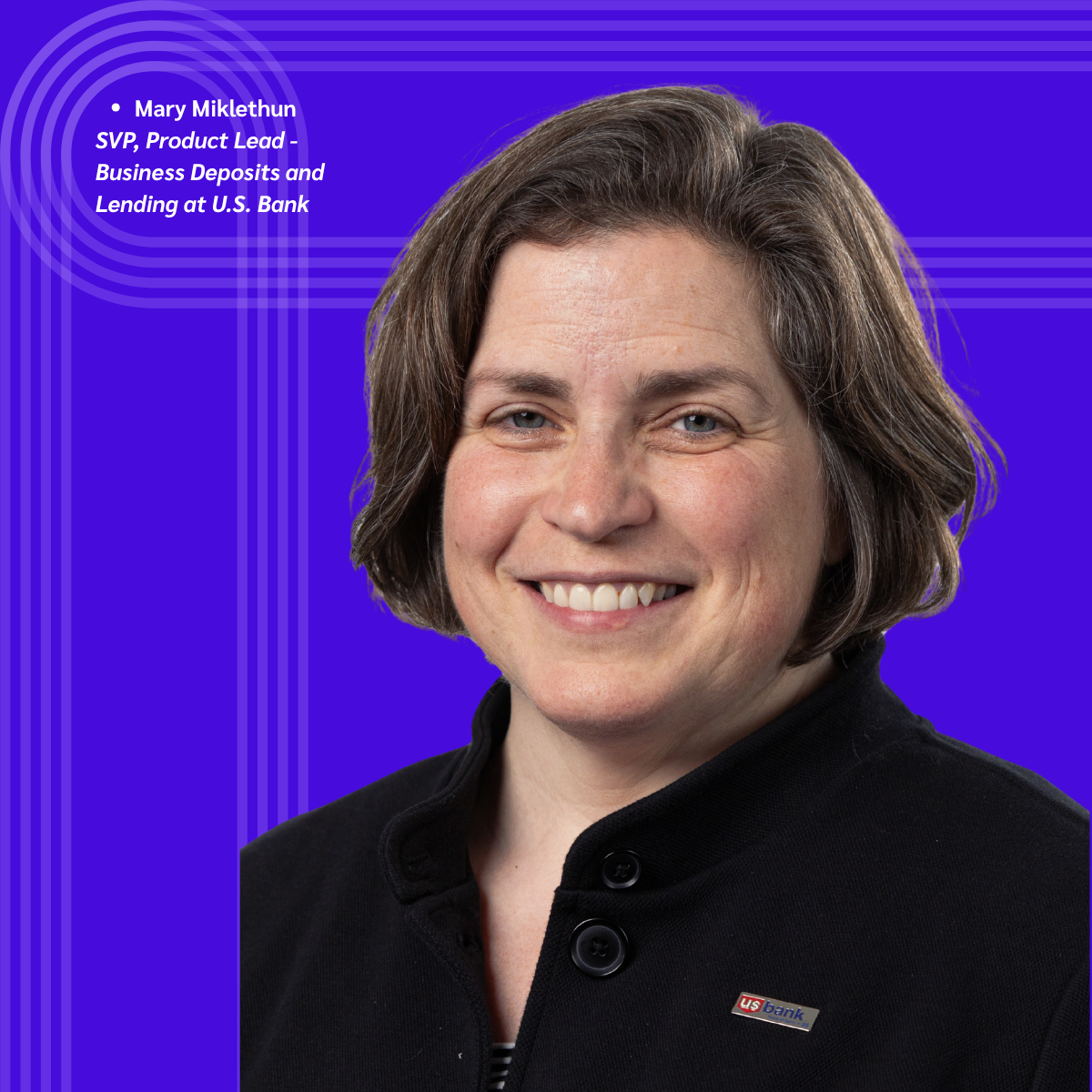
U.S. Bank’s SVP and Product Lead for Business Deposits and Lending, Mary Miklethun, walks through the bank’s approach.
Q: What gap in the SMB market was U.S. Bank most determined to fill with Business Essentials, and how did that guide the team’s priorities during development?
Mary Miklethun: As small business owners increasingly use software to manage their companies, we continue to hear that consolidating their digital solutions is a priority.
In a national survey conducted by U.S. Bank with more than 1,000 small business owners, 80% said they prefer service providers who can bundle their digital banking, payments, and operations tools. To address this desire, the team set out to simplify business banking and payments for small business owners. We wanted to create a best-in-class bundle with a checking account and payments capabilities all within a single dashboard. We also wanted to offer the customer a single application and onboarding experience.
Throughout the process, we were hyper-focused on the small business customer journey. From our research and work with clients, we knew that small business owners wanted an operating account to manage cash flow. They needed payments acceptance capabilities, robust money movement capabilities, and sophisticated but easy-to-use software. We conducted a customer journey mapping exercise with our cross-functional product council, and we focused on how we would bring together all of these tasks into a single bundle. As we worked through the technical challenges of making it happen, we kept the entrepreneur’s needs at the center of everything we were doing.
Q: To support features like same-day funding for card sales, what specific technological upgrades or architectural changes were most critical behind the scenes?
Mary Miklethun: With regard to same-day funding, this is a feature we were able to bring into Business Essentials with minimal technical work. As a bank that also owns our own payments processing capability, this is a unique value proposition that we offer to all customers who process card transactions with us and have their processing funds transferred into one of our deposit accounts. Aligning the application and approval processes across deposits and merchant processing simply makes it even easier for customers to adopt both solutions and take advantage of this benefit.
Speaking generally, when creating a new product, legacy infrastructure is something most banks, including U.S. Bank, have to consider. While legacy infrastructure tends to have a negative connotation, that technology has also been core to the safety and security of our customers’ financial data and to the stability of our products and services, including our digital small business solutions.
As part of building Business Essentials, we needed to upgrade legacy systems, and we committed to addressing this tech debt as part of a multi-year journey. We invested in building modern data integration and digital experience layers on top of that underlying infrastructure to enable the digital products and solutions that business owners need today.
Q: Which internal teams played a central role in building Business Essentials, and how did their collaboration ensure the product came together as one unified solution?
Mary Miklethun: To build Business Essentials, we needed a cross-functional team across banking, payments, sales, and technology. Collaboration between these teams was vital. As we brought together banking and payments capabilities, we had to prioritize and make some trade-offs. We had to work together to create a unified tech roadmap across different parts of the franchise.
Through this collaboration, we brought together legacy banking and payments technology platforms into a single application process and a single interface. We learned a lot about working across areas that were previously siloed and the relationship-building that is required to do this successfully. Throughout all of this, we continually centered our focus on our 1.5 million small business customers. Any bundle had to be relevant to a large base of customers and support these customers’ needs.
Q: Every major product launch has challenges. What was the toughest technical or structural hurdle the team faced during development, and how did solving it make the final product stronger?
Mary Miklethun: In creating Business Essentials, we faced two major challenges:
- First, we had to bring together multiple technologies used by different business lines.
- Second, we had to face the challenges of being part of a large matrixed organization. This required a top-down commitment from leadership to build a differentiated product from scratch.
Addressing these challenges made Business Essentials better because we were able to select the applications and technologies that were the best fit for this product. We also broke down walls between business units, allowing us to leverage the strengths and resources across multiple business lines.
Q: Now that Business Essentials is live, how do you see it evolving? What future features or integrations excite you most about building on this foundation?
Mary Miklethun: Since launching U.S. Bank Business Essentials in April 2025, we’ve already received positive feedback from our clients and seen strong results, including adoption rates that have exceeded our expectations. We’re only about six months post-launch at this point, but we’re excited to see how this new bundle continues to simplify operations and drive growth for our clients. We are continuing to focus on bundling, value-added solutions, and bringing small business owners integrated solutions in a one-stop hub.
We will also continue to release updates with added functionality. For example, we know many businesses use more than one checking account to separate their funds, so last month, we made it easy for customers to set up multiple accounts. We also just upgraded Bill Pay for Business and introduced U.S. Bank Payroll, integrated digital tools that help customers get even more value out of their Business Essentials account.
There’s more to come, and we’re excited about what’s ahead!