
Startup Roundup: Marketplace lending up big, blockchain getting a lot of attention

fintech startups shaking things up

[alert type=white ]Every week, we write about fintech startups raising money, making partnerships, and generally disrupting finance.[/alert]

Wow, what a week.

Money 2020 has turned into a must-attend fintech event. Equity crowdfunding rules were announced on Friday –  creating utter chaos for some players and elation for others. Things are speeding up in fintech land as stock market holder ICE bought leading data provider IDC in a deal worth over $5B.

For more fintech coverage during the week, you’re going to want to connect with Tradestreaming on Facebook. Click here to do following Tradestreaming on Facebook.

OneVest Launches “1000 Angels” to Reinvent Venture Capital (Crowdfund Insider)
Tradestreaming Tearsheet: Onevest, a New York based investment crowdfunding platform focused on funding start-up entities, has announced the launching today of its new “1,000 Angels, the “world’s largest digital-first, invitation-only investor network”.

$1 Billion In Small Business Loans From PayPal (PYMNTS.COM)
Tradestreaming Tearsheet: PayPal used to be all about processing payments instead of handling funds, but if you’re not growing in this business, you’re dying. PayPal is serious about growing its SMB loan business and seems to be positioned well to continue attracting new business borrowers.

Can This Startup Restore Privacy in Payments and Turn a Profit? (American Banker)
Tradestreaming Tearsheet: Privacy.com is catching the attention of many finance professionals (including some smart fintech investors) as a creative security platform that’s building its business by protecting transaction privacy. In the Edward Snowden era, it will be interesting to see if the startup can build a business with its revenue model (taking a cut on interchange fees around a transaction).

Bizfi Originates $127M in Financing in Q3 2015 (BusinessWire)
Tradestreaming Tearsheet: Bizfi, a fintech platform that combines aggregation, funding and a participation marketplace for small businesses had a very good quarter, reporting $127M in business financing during Q3 2015.

ReadyForZero launches credit monitoring product (ReadyForZero)
Tradestreaming Tearsheet: Following CreditKarma’s success in providing credit tools, personal finance manager (PFM), ReadyForZero launches its own credit monitoring tool.

Groundfloor Announces Three New Tools to Expand Peer-to-Peer Real Estate Lending (Crowdfund Insider)
Tradestreaming Tearsheet: On Monday during the Money2020 conference, real estate lending marketplace Groundfloor introduced three new analytic tools that allow peer-to-peer real estate investors greater flexibility and analysis over security selection and portfolio management.

Digital Asset Holdings Acquires Blockchain-as-a-Service Innovator, Blockstack.io (Finovate)
Tradestreaming Tearsheet: “Miron Cuperman, Blockstack CTO, called Digital Asset “the best platform” to deliver Blockstack’s blockchain application development tools as part of a comprehensive solution for customers. Digital Asset Holdings CEO Blythe Masters praised both Blockstack’s technology as well as its talent, calling Cuperman “a renowned pioneer in the blockchain world.””

Lending Club Reports Q3 Results. Loan Originations Jump 92% Year-over-Year (Zacks)
Tradestreaming Tearsheet: Lending Club (NYSE: LC), the largest marketplace lending platform in the US, has announced Q3 results. And the origination growth is silencing some of the biggest critics of the first marketplace lender to float on public markets.

Startups raising money this week

Spreedly Raises $2.5 Million in New Funding (Finovate)
Tradestreaming Tearsheet: Spreedly helps marketplaces and platforms accept a wider range of payment types while reducing cost, complexity, and compliance burden.

Zebit Secures $10M investment; Launches Zero-Interest Credit to the Underserved (LetsTalkPayments)
Tradestreaming Tearsheet: The credit can be used to make purchases from the Zebit Market or directly from retailers that accept Zebit as a checkout option.

Issuer processor platform Marqeta closes $25m funding round, new customers (Finextra)
Tradestreaming Tearsheet: At Money20/20 2015, Marqeta, the Open API issuer processor platform, announced a host of new marquee customers, including Affirm, DoorDash, HyperWallet and Kabbage, alongside known customers such as Facebook, Bento for Business and Perk. Marqeta also confirmed closing a $25 million Series C round.


2 major trends top investors and fintech entrepreneurs talked about at Stocktoberfest 2015

review of the 2015 stocktoberfest event with Howard Lindzon

It’s that time of year again: when scores of investors descend upon Coronado, a small town across San Diego Bay from downtown San Diego. It’s there, that for 2+ days, they’re treated to discussions by some of the smartest investors around. It’s Howard Lindzon‘s shindig and Stocktoberfest has become a must-attend event for traders, investors, and fintech entrepreneurs.

Howard’s activities as fintech angel investor (see his Social Leverage portfolio), entrepreneur (previous CEO of StockTwits, Wallstrip), and generally gregarious professional position him as an ideal connector for this event which essentially ran 2 tracks this year (or themes): the race to a $1 trillion marketcap for the largest tech firms and the social finance revolution. For startups, Stocktoberfest acts as a sort of launching pad, with a few of the firms presenting in front of a professional audience for the first time.

Marketplace lending is better

There were a few of themes coming out of Stocktoberfest that resonated with attendees (Lindzon himself wrote up his own 10 takeaways from Stocktoberfest 2015). The first was regarding the big changes facing banking.

With the growth in marketplace lending firms like Lending Club and Prosper, industry analysts think that it’s not only an inefficiency in the market that’s powering these firms, but marketplace lending is just better than traditional borrowing/lending.

According to Lindzon:

At Stocktoberfest, ApplePie Capital, PeerStreet and ProducePay received the most attention from friends in attendance. Hunger for yield matters.

Cost of information (nearly) free, but value going up

Many of the attendees to Stocktoberfest are in the investing content game themselves. They blog, podcast, and tweet about the markets. Some of these analysts, like Brian Lund, have extensive experience investing. Lund, who founded broker-dealer Ditto Trade in 2008, has been trading the markets for over 30 years and his opinion pieces are syndicated to Yahoo Finance, AOL’s DailyFinance, and About.com.

Lund observed that while the price of content is going down, the value continues to improve.

The days when you had to be an embedded analyst at a major Wall Street firm, or pay nosebleed subscription prices to get access to top shelf data and information are over.

Take, for example, Urban Carmel, who writes The Fat Pitch, was named after Pope Urban II by his papal loving parents, and sipped 18-year-old Scotch while Howard interviewed him.  His take on the market is informed, experienced, and insightful, and he gives it away for free.

Gregor Macdonald on energy. Dr. Brett Steenbarger and Chris Kimble on trading. Herb Greenberg and Eddy Elfenbein on markets.  These are just some of the great content providers who showed up at Stocktoberfest.

Just a few years ago, the Finovate series of events were pretty much the only game in town when it came to showcasing top talent and technology in the fintech space. Events like Stocktoberfest are becoming more common and provide a powerful sounding board for fintech startups to get up in front of a room full of prospective customers of their products. Now, it seems like almost every week new fintech accelerators, focused VC funds, and meetup groups are being launched.

Here’s a short video of Howard Lindzon and Jeff Macke talking about what they took away from Stocktoberfest 2015.

[x_share title=”Share this Post” facebook=”true” twitter=”true” linkedin=”true” reddit=”true”]

[x_author title=”About the Author”]

Startup Roundup: Goldman Sachs, American Express placing further fintech bets

fintech companies making news this week

[x_alert type=”success”]Every week, we write about fintech startups raising money, making partnerships, and generally disrupting finance[/x_alert]

This week, finance’s who’s who soiréed at the Economist’s Buttonwood Gathering. The one question that seemed to underly all the discussions and break out sessions:

  • what about banks?
  • What’s the banking sector’s role going forward when fintech is disrupting from above, below, and laterally?

The Startups: Who’s shaking things up

Inside Monese, the mobile banking app for migrants (Tradestreaming)
The app lets people sign up with just a picture of a passport and a selfie in as little as 3 minutes.

LendKey Enhances Lending-as-a-Service for Local Banks & Credit Unions (Finovate)
Tradestreaming Tearsheet: Even in this newsletter there’s lots of talk about the competition hitting banks. New platforms like LendKey don’t disintermediate them as lenders; instead, they help them create digital offerings and compete. It will be interesting to see how many banks adopt platforms like LendKey or instead partner with the larger online lenders.

Indiegogo Launches Generosity To Compete In Personal Crowdfunding (About.com)
Tradestreaming Tearsheet: After GoFundMe’s (crowdfunding platform for personal campaigns like paying medical bills or tuition) success and raising massive amounts of capital, Indiegogo wants more of the market and relaunches (and rebrands) its own offering, Generosity.

Digital currency is poised to reinvent how startups are funded, led by Chroma Fund (TechRepublic)
Chroma Fund is a crowdfunding site powered by the blockchain, the same underlying technology that powers Bitcoin. Learn how it’s preparing to disrupt startup investing.

From start-up to incumbent: the innovation cycle (The Finanser)
Tradestreaming Tearsheet: Interesting framework to think about growth in the fintech industry and how that maturation unfurls for startups on their way to becoming larger, incumbent players. Useful for startup founders and those investing/partnering with fintech startups.

RushCard Breakdown Affects Thousands of Prepaid Debit Card Users (NYT)
The troubles, lasting much of the past week, illustrate the potential perils for those without access to the banking system.

Co-Founder of Capital One, Nigel Morris, Joins Zopa Board (Crowdfund Insider)
Morris, currently the Managing Partner at QED Investors, is the co-founder of Capital One. QED has invested in well known Fintech companies, including, Credit Karma, Avant Credit, GreenSky and SoFi.

OnDeck Adds New Small Business Lending Options (Finovate)
“The expanded product suite includes broader loan terms, increasing the maximum loan amount from $250,000 to $500,000 and granting borrowers up to 36 months to repay (from 24 months). Lines of credit will be available up to $100,000 (from $20,000) for a monthly fee of $20 and no “draw fees.” And repeat customers will be eligible for annual rates as low as 5.99%, as well as loyalty pricing benefits.”

Early Read on Square’s S-1 Filing (First Annapolis)
Good initial read of the payment firm’s IPO filing – what questions it answers and which ones remain unanswered.

Startups raising money this week

Goldman Sachs leads investment in cloud-based POS startup Financeit (Finextra)
FinanceIt enables businesses to offer payment plans to their customers and Goldman Sachs wants a piece of the online lending fintech firm.

American Express Invests In Bitcoin Venture, Abra, Which Announces U.S., Philippines Launch (Forbes)
Bitcoin startup Abra will soon launch in the US and Philippines, and is rolling out a merchant services API. It also received investment from American Express and Ratan Tata.

Citrus Payments Raises $25M (Let’s Talk Payments)
PE firm Ascent Capital and early investor Sequoia are investing $25M in Citrus’s C round. Citrus “makes digital payments and online checkout processes simpler, faster, safer and easier for an 800 million strong electronically connected user base”.

[x_share title=”Share this Post” facebook=”true” twitter=”true” linkedin=”true” reddit=”true” email=”true”]

The Economist takes honest look at fintech

future of banking

The Economist, on the eve of its Buttonwood Gathering in NYC, takes an open look at fintech, stripping away the hype to discuss the longterm prospects of fintech and how startups will continue to interact with the incumbents in the industry (namely, banks)

How Silicon Valley Will Bring Down the Banks

[x_pullquote type=”right”]If you look ahead 5-10 years the things that put banks under most pressure today, notably, regulation, will be the things that ultimately protect them[/x_pullquote]In this edition of the Economist’s Money Talks, banking editor, Stan Pignal talks to American finance editor, Tom Easton and the duo spend a lot of time analyzing the banking system: its current strengths and weaknesses and what it may look like 5-10 years out.

It’s actually a pretty dour outlook for today’s banks, according to Pignal and Easton. It seems the only hope the incumbents have is current regulation.

What happens to Marketplace Lenders during a crunch

Next up in the discussion were marketplace lenders, like Lending Club and Prosper. Both participants are surprised that banks hadn’t gotten into this business in a bigger way.[x_pullquote type=”left”]Weren’t banks designed to be marketplace lenders from the onset?[/x_pullquote]

Since the lenders on these platforms haven’t been through a full credit contraction cycle while using the marketplace lending platforms, it’s going to get interesting when these lenders suffer losses for the first time. What happens then?

Pignal and Easton make it clear that banks will never again look like their former selves but regulation will ensure their endurance in a more limited capacity. The competition from startups in the fintech space should force the banks to sharpen their games and specialize in delivering the services they can deliver profitably under the current regulatory regime.

Today’s bankers, tomorrow’s fintechers

The podcast draws to a close with the observation that if you head to a bank, take a look around. It’s clear: bank employees and bank management are not happy. But if you look at fintech firms, people are happy and optimistic about the future.

What’s interesting, note the two hosts of the podcast, is that fintech firms employ people who used to work for banks. They conclude that if bankers are to have joyful futures, it will be working at fintech firms.

London gets its IPO with Worldpay

London fintech IPO: Worldpay

UK-based payments processor, Worldpay floated its shares last week in the UK. Initially priced at a value of £4.8 billion, Worldpay is London’s largest IPO for 2015. This exit netted a reported £3.2B in profit for Worldpay investors, Advent International and Bain Capital.

Reactions to the Worldpay IPO

Reactions to the IPO have been generally positive in fintech land.

Bernard Lund thinks that the Worldpay IPO is a big deal for London:

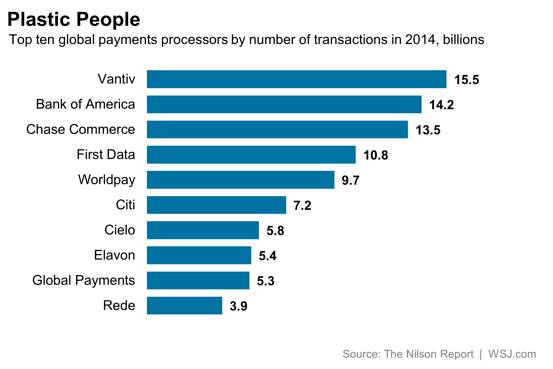
It is a big deal that Worldpay did its IPO before First Data – both are in payments and both were backed by US Private Equity. With a market cap of $20 billion, First Data is bigger than Worldpay (about #6 in the Daily Fintech Public Index), but we can now do valuation comparables across US and UK exchanges and I expect US and Asian investors interested in the payments space to be checking out Worldpay in London. Square IPO may struggle with these comparables.

Business Insider also thinks the Worldpay IPO is a pivotal moment for London fintech:

We could look back on Worldpay’s stock market listing in a few years and see it as the point fintech in London kicked up a gear. To have a £4.8 billion FTSE 100 goliath batting for the sector is huge.

Not everyone is so bullish on the Worldpay IPO. Some, like the WSJ, think the deal might have been expensive and perhaps auguring a bubble in fintech.

Investors in the IPO seem to be pricing Worldpay on profitability before the ongoing costs of building its own better systems, which it has been doing since being bought from RBS by private equity groups, Advent International and Bain Capital.

Strip these out and it still priced at 22-times underlying net profits forecast for 2016, or at an enterprise value that is 16 times underlying earnings before interest, tax, depreciation and amortization.

Some recent fintech companies that have IPOd, like Lending Club, have gone public with a lot of fanfare, only to see their share price flounder (Lending Club is down close to -40% from its IPO pricing). With Worldpay’s float and Square’s recent S-1 filing, public markets are certainly eyeing up fintech investments.

[x_share title=”Share this Post” facebook=”true” twitter=”true” linkedin=”true” email=”true”]

[x_author title=”About the Author”]

Daily Fintech Startup Watch: It’s raining money (Stockpile, Moven, RealtyMogul)

Daily News on Fintech Startups

Stockpile raises $15M

stockpile gift card for stock

Buying stock for your friend’s kid’s bar mitzva has never been easier than with Stockpile, the world’s first gift card for stock. The company just reported the closing of a $15M investment round with some high profile angels (Ashton Kutcher) and A-list VCs, Mayfield and Sequoia, participating.

RealtyMogul passes $150M milestone

realtymogul

Equity crowdfunding platforms seem to be hitting their early strides and RealtyMogul is enjoying the growth. The real estate-focused firm announced it had topped a total of $150M of investments transacted via its site.

Moven gets moving with more investment

moven

Leading example of Bank 2.0, Moven, finished raising a fresh round of investment earmarked for international expansion.

InvestCloud closes $45M growth round

investcloud

App platform for investment managers, InvestCloud, scores big investment. Here’s what InvestCloud is up to:

Founded in 2010, InvestCloud makes use of a technology founder John Wise calls“Programs Writing Programs” to develop new software without having to write much new code. Advisors can select from thousands of applets located on a cloud-based platform to assemble their own client portals, CRMs, reporting tools, or even a robo-advisor.

Hip Pocket rolls out new app

hippocket app

Hip Pocket is launching a mobile app that offers savings suggestions and facilitates deposits based on users’ incomes and goals. Its “swipe-to-save” technology  is intended to encourage Americans to save more with their local banks.

[x_share title=”Share this Post” facebook=”true” twitter=”true” linkedin=”true”]

[x_author title=”About the Author”]


Google hears the fintech music, invests in Symphony

fintech and google ventures

Without much fanfare and quietly, Google has become one of the most active early stage investors in fintech.

GOOGLE’S INTEREST IN FINTECH

Google’s interest in fintech has included multiple investments in collaborative finance platforms, making the search firm one of the most active investors in crowdfunding. But the firm’s interests span beyond the excitement of social investing — it’s also interested in putting its chips down on more core fintech bets, including trading, digital currency, ecommerce, and back office settlements.


google is one of the most active fintech investors

In fact, over the past 5 years, Google Ventures has been the most active fintech investor anywhere.

MOVING DEEPER INTO THE FINANCE INDUSTRY

Yesterday,  an industrial-grade communication tool developed and owned by a financial industry consortium, Symphony, announced that it had raised a new investment round totaling over $100 million.

Filling out the list of 21 finance and venture firms participating in the round was Google Ventures.

Symphony’s Wall Street backers are seeking to challenge communications and data firms including Bloomberg News parent Bloomberg LP and Thomson Reuters Corp.

Even Bloomberg News was cognizant of the fact that Symphony is competing head-head with the same messaging tools used on the Bloomberg terminal.

This investment adds to a warchest of another $66 million Symphony has raised previously. Roth Porat, CFO of Google’s parent company, Alphabet, was an early backer of Symphony in her role as CFO at Morgan Stanley. Re/Code had an early scoop last week that Google was in talks to back the communications technology company.

[x_share title=”Share this Post” facebook=”true” twitter=”true” linkedin=”true” email=”true”]

[x_author title=”About the Author”]

Equity crowdfunding: The next leg in online investing

In 2007, I dipped my big toe into the online finance space when I joined Seeking Alpha.

Since then, we’ve seen so much happen in fintech: the past few years have witnessed the rise of the personal finance manager (PFM), the roboadvisor, a new type of currency and underlying infrastructure with Bitcoin, tools to mimic hedge funds and mutual funds, and more.

The history of online investing

I’ve tried to outline what I feel to be the historical signposts along this road toward online investing.

The momentum that kicked off when Charles Schwab launched a new way to invest in 1971 — a way that prized independence, low fees, and a do-it-yourself attitude that no one can manage your own money as well as you can — is ramping today.

When Wealthfront gets another $1 billion under management, when LendingClub and Prosper underwrite another $1 billion in marketplace consumer loans, when another asset class gets crowdfunded, this is what I’m talking about.

Can all asset classes be crowdfunded?

TechCrunch ran this story over the weekend about CrowdJustice — a platform that

allows communities to band together to access the courts to protect their communal assets — like their local hospital — or shared values — like human rights. Successive governments have made access to justice harder and more expensive but we are using the power of the crowd to try and stem the tide

When cryptocurrencies meet social networks, when peers fund peers, when we move our investing opportunity online, we deconstruct old markets and create new ones.

Crowdfunding is already changing the way young and small businesses find financing.
Equity crowdfunding — drawing relatively small investments from the crowd to early stage companies — is just getting going.

Powering the marketplace lending ecosystem — with Matt Burton

orchard powers crowdfunding

This is the next instalment of our series on crowdfunding. You can access my other interviews on crowdfunding here and here.

Matt Burton, cofounder of the Orchard Platform joins me, Zack Miller, on the Tradestreaming Podcast.

Crowdfunding is a huge, transformative trend in investing. Both individual and institutional investors alike are turning to crowdfunding to deploy their monies.

Matt’s company, Orchard, provides the technology infrastructure of many of these new platforms (what Burton calls the “marketplace lending ecosystem”). Given his ringside seat to what’s transpiring in the p2p lending (and broader, in crowdfunding in general) industry, Matt addressed why investors are so interested in this new form of investing, how individual investors and professionals are using these crowdfunding platforms, and more.

Listen to the FULL interview

About Matt

Matt Burton is co-founder and CEO of the Orchard Platform and has spent his entire career helping build, scale, and optimize the internet’s top advertising exchanges (Google, Admeld, LiveRail).

More resources

Even More Resources

Visit our Sponsor

OurCrowd is a better way to invest in startups. Identify and invest in the next Facebook, Google, and Apple on OurCrowd’s investment platform of vetted and diligence of startup investment opportunities. Check out OurCrowd.

Do you have something to share? Let me know in the comments and subscribe below to be notified of new podcasts and articles.

Photo credit: RTD Photography / Visual Hunt / CC BY-SA

Update: Fintech M&A, circa 2013

fintech M&A 2013

From Berkery Noyes, an independent iBank with some great industry data, comes an update on mergers and acquisition activity in the fintech space.

Q3 2013 KEY TRENDS

  • Total transaction volume in Q3 2013 increased by 21 percent over Q2 2013, from 77 to 93.
  • Total transaction value in Q3 2013 rose by 55 percent over Q2 2013, from $5.5 billion to $8.5 billion.

Q3 2013 KEY HIGHLIGHTS

  • Davis + Henderson’s acquisition of Harland Financial Solutions, a provider of software and services to fi nancial institutions, was the largest transaction in Q3 2013, with an acquisition price of $1.6 billion.
  • The industry’s most active acquirer year-to-date was Thomson Reuters with nine transactions. Five of these occurred in Q3 2013: BondDesk Group LLC, Bisk CPE and CPA Test Prep Division from Bisk Education, Inc., Omnesys Technologies, SigmaGen

For more transactional information on fintech, check out MandASoft