

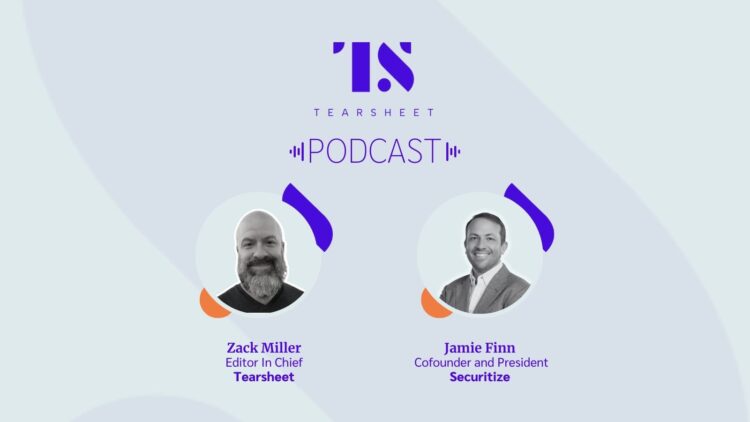
Unlocking access to top asset managers: The Securitize story with Jamie Finn
- With all the efforts and investment in the private securities space, there's still a ton of room to compete and grow.
- Jamie Finn, President of Securitize, a private shares marketplace, joins us on the podcast to talk about growth, digital assets, and bridging top asset managers with individual investors.
In the early days of Tearsheet over 10 years ago, we spent more time covering private markets for assets. Remember back, that was the crowdfunding and equity crowdfunding era. There was a view that this massive market, arcane in structure and available to the wealthy, would be opened up by tech and some regulatory changes and that a dentist in Chicago would get access to the same deals Blackstone and Andreesen Horowtiz were investing in.
So, it doesn’t feel like equity crowdfunding really lived up to the hype but the market continues to grow and mature. Most of the big wins come not from investing in individual companies but in funds. Jamie Finn, co-founder and president of Securitize, joins me on the podcast to talk about where we are with investing in privately held companies and funds. His firm’s platform, Securitize, enables smaller investors to tap into some popular private equity funds directly and through secondary transactions.
Behind the scenes, Securitize is doing this on the blockchain. It’s not something Jamie explains right away – it seems to be something they’ve built out but the main pitch is on alternative assets and not necessarily on the fact that these have been designed as digital assets.
Jamie shares the genesis of the company and how he sees the market for alternative assets maturing in the future.
Securitize’s Jamie Finn is my guest today on the Tearsheet Podcast
The big ideas
- Democratizing Access to Investments: Securitize aims to provide a platform for investors to access alternative investments from top asset managers with low minimums, making these opportunities available to a broader audience.
- Global Investor Reach: Securitize has attracted a diverse mix of investors from over 120 countries, primarily younger individuals with a focus on late millennials, who are seeking access to investments they wouldn’t typically have access to due to high minimum requirements.
- Diversification of Investor Products: Securitize offers a range of products catering to different investor types, including qualified purchasers, accredited investors, and retail investors, thus expanding access to a variety of investment opportunities.
- Focus on Quality: The platform prioritizes offering high-quality investment products to attract investors, emphasizing the importance of investment outcomes rather than novelty. They have learned that quality investments are key to driving investor interest and participation.
- Introduction of Digital Securities: Securitize utilizes blockchain technology to tokenize securities, providing investors with a digital format that offers advantages such as streamlined transactions, proven ownership, and potential for secondary market trading.
- Future Expansion and Challenges: Looking ahead, Securitize anticipates an acceleration in the adoption of tokenized securities, driven by regulatory clarity, increased investor confidence, and the entry of major asset managers into the space. However, challenges such as regulatory compliance, market liquidity, and investor education remain significant areas of focus and development.
Listen to the full episode
Subscribe: Apple Podcasts I SoundCloud I Spotify I Google Podcasts The following excerpts were edited for clarity.
Read the full transcript (for Pro subscribers)