


How U.S. Bank’s innovation team tries to uncover the tech trends reshaping financial services
- U.S. Bank's innovation team shares the emerging tech trends they spotted at the latest CES conference
- Find out how the bank's "applied foresights" approach is guiding its strategic response to disruptive industry changes
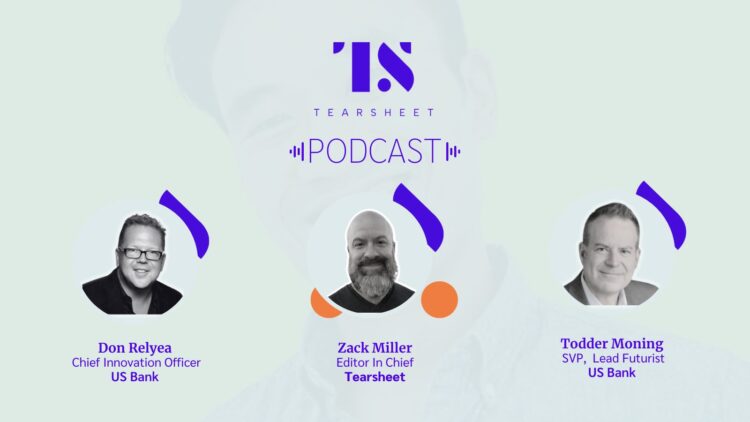
Today, we’re joined by Don Relyea, the Chief Innovation Officer at U.S. Bank, and Todder Moning, who leads the bank’s applied foresights practice.
They’ve recently returned from scouring the halls of CES, the annual consumer electronics show, on a mission to uncover the latest trends and emerging technologies that could disrupt – or benefit – the financial services industry. From the rise of edge AI and machine vision capabilities that could enable personalized, privacy-preserving experiences, to sustainable innovations like water generation devices that challenge traditional infrastructure, Don and Todder share the diverse insights they gathered at this year’s CES.
You’ll hear how the U.S. Bank innovation team is working to transform these market signals into strategic advantages for the bank. They’ll explain how technologies first showcased in consumer products are reshaping customer expectations, and how the bank is preparing business leaders to adapt to this rapidly evolving landscape. By considering both the upsides and potential downsides of emerging innovations, the applied foresights practice is helping ensure U.S. Bank stays ahead of – rather than chasing – the pace of change.
-
Financial services are being reshaped by technologies that erase barriers between industries and change customer expectations: “The technology continues to sort of erase the barriers between industries, and it changes customer’s expectations of what’s possible. And then they come to expect that of us.”
-
Embracing an applied foresights approach helps organizations proactively prepare for potential future scenarios: “We use foresights to help business line folks consider possible futures. It uses facts about the past and present to create scenarios, which are just really prototypes of potential futures.”
-
Monitoring emerging signals and trends at industry events like CES is key to identifying strategic opportunities and threats: “When we go, we have our consumer and employee hat on first, because they’re going to be experiencing these things in their daily life. And if they’re going to experience these, these products, services, etc, that are desirable, then we go back and try to incubate on that.”
-
Innovations in edge AI and machine vision can enable personalized experiences while preserving customer data privacy:“With emergence, Edge AI capabilities, both in physical spaces and all the mobile phone developers are really going to be pushing hard to create devices that can have edge AI capability…the great news about this is I think there’s opportunities for us to explore use cases where users retain all of their data.”
-
Sustainable and decentralized technologies, like water generation devices, represent potential disruptions to traditional infrastructure: “There was this thing called the water cube…it would take water out of the air and filter it…the one for your home, that was the size of an air conditioner. That would do trying to remember something like 120 gallons of water, a day of pure dry. And so the idea, and then the bigger one that you use for, you know, disasters and search and rescue and military, they can just pop this thing down and it makes thousands of gallons.
So settle in, as we dive into the future-focused mindset that’s guiding innovation at one of the country’s largest banks. Let’s get started.
Listen to the full episode
The following excerpts were edited for clarity.
Read the full transcript (for TS Pro subscribers)