

Web3 companies also need payroll: Franklin’s CEO Megan Knab explores blockchain’s role in financial tools
- By bridging the gap between Web3 and traditional finance, Franklin's payroll and payments is finding a market in Web3 businesses.
- In this episode, CEO Megan Knab discusses how blockchain technology is transforming financial operations for businesses.
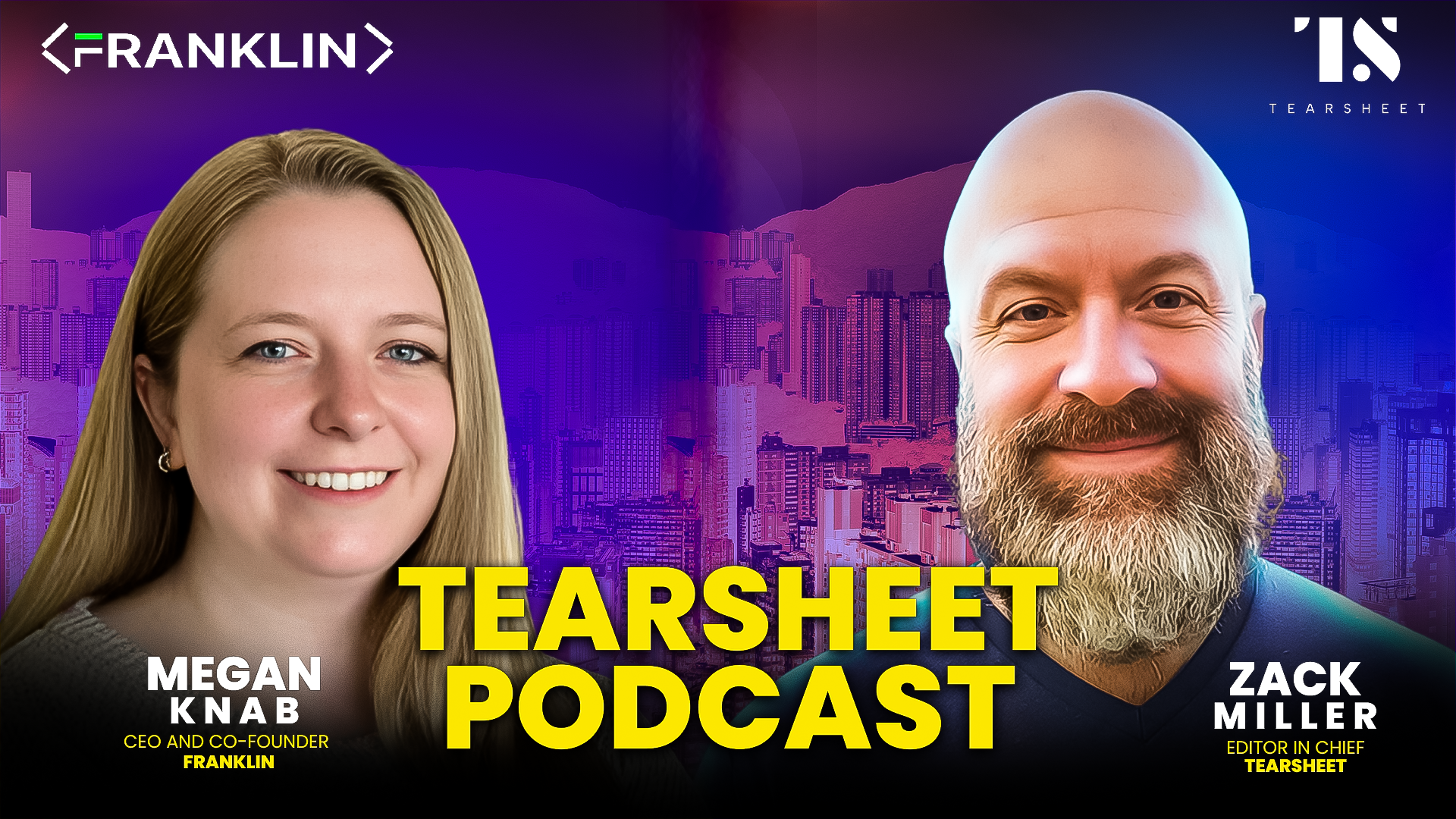
Franklin bridges the gap between Web3 and traditional finance, rethinking how businesses manage payroll and payments. Today’s podcast features Megan Knab, Franklin’s CEO. She shares insights into the transformative role of blockchain in financial operations. She has a vision: leveraging blockchain to modernize payroll and financial tools. Megan has a rich fintech background comprised of roles at Serotonin, DriveWealth, and Veriledger.
As an accountant by trade, Megan is no stranger to navigating financial systems. She became passionate about blockchain in business school after discovering an accounting fraud at work. “Public blockchains,” she recalls, “have the power to create an open financial system.”
Megan founded Franklin two years ago to simplify financial operations for Web3 businesses. She focuses on making finance easier and more efficient. She notes, “Anyone who’s used payroll software in the last 10 years knows it can be an antiquated experience.” Franklin integrates both fiat and on-chain payment capabilities. This strategy allows it to operate in both Web3 and traditional finance. As a result, Franklin is carving out a unique niche in both areas.
Crypto and financial tools
Megan highlights blockchain’s potential to enhance back-office operations for B2B organizations. She notes, “Stablecoins can leapfrog current payroll technologies by facilitating faster payments.” She also explains that blockchain’s immutability ensures greater accuracy in financial reporting. This also builds trust in the data. “By using public ledgers, businesses can reduce errors and streamline audits. This creates efficiencies that traditional systems struggle to match,” Megan adds.
Blockchain’s ability to integrate with existing payment systems is driving innovation. This is creating new financial tools for modern business needs.
Tax compliance and crypto
One of Franklin’s standout features is its focus on tax compliance. Megan explains, “We build tools that ensure every transaction adheres to federal and state regulations.” She emphasizes that Franklin’s proactive approach simplifies navigating the regulatory maze. “With over 675 tax jurisdictions in the U.S., automation is critical for ensuring accurate reporting. And avoiding costly errors,” Megan notes. This commitment makes Franklin a trusted partner for businesses handling complex payroll systems.
Decentralized finance for B2B
Megan believes decentralized finance (DeFi) has practical use cases for businesses. ” We’re helping companies operate seamlessly in fiat and crypto. Whether it is multi-currency payroll or international remittances,” she says.
She also highlights the cost advantages of DeFi. “Businesses can reduce transaction fees and enhance payment speed. It does so by eliminating intermediaries. These are critical factors for today’s global operations,” Megan explains.
Early Wage Access without loans
Franklin’s approach to early wage access differs from traditional models. Megan critiques typical earned wage access programs as “modern payday lending”. She advocates for faster money movement using stablecoins instead. She adds, “Why burden employees with hidden loan agreements when we can facilitate instant payouts?” This method empowers workers and also minimizes administrative overhead for businesses. Franklin uses stablecoins to provide an alternative to outdated payroll systems. This creates more flexibility for both employers and employees.
The Path Forward: Privacy and adoption of crypto
For broader blockchain adoption, Megan identifies a need for privacy technologies. “Financial institutions will continue experimenting rather than integrating. This will happen until we address privacy concerns.” she asserts.
She highlights solutions like zk-SNARKs as promising but notes their computational expense. “The key lies in enabling selective disclosure of transaction data. It includes ensuring both compliance and confidentiality,” Megan explains. She envisions a future where blockchain is a core part of financial infrastructure — not just an experiment. Advances in privacy tech can make this possible.
The Big Ideas
1. Blockchain Drives Transparency and Efficiency. Megan states, “Public blockchains can create transparency in financial systems. But adoption in heavily regulated industries remains challenging.”
2. Multi-Currency Payroll Is a Necessity for Modern Businesses. Franklin’s tools enable businesses to pay in both fiat and stablecoins. “This flexibility is crucial for modern, remote-first teams,” Megan explains.
3. Tax Compliance Is Key to Crypto Adoption. “With over 675 tax jurisdictions in the U.S. alone,” Megan points out, “building a compliant payroll system is no small task, but it’s essential.”
4. Faster Payroll Cycles Empower Both Employers and Employees. Megan challenges traditional pay cycles. She asks, “Why should employees give interest-free loans to their employers? Stablecoins offer a faster alternative.”
5. Bridging Traditional Finance and Decentralized Systems Is the Real Opportunity. Megan underscores the importance of hybrid models. She says, “Real market potential lies in bridging traditional finance with decentralized systems.”
Listen to the full episode
Subscribe: Apple Podcasts I SoundCloud I Spotify
Watch the full episode
Read the transcript (for TS Pro subscribers)