


Behind the creation of Current’s new credit builder card
- As neobank Current continues to roll out products for everyday Americans, the firm recently introduced a credit builder product.
- CEO Stuart Sopp and CTO Trevor Marshall join us on the podcast to talk about the evolution of the company and its products.
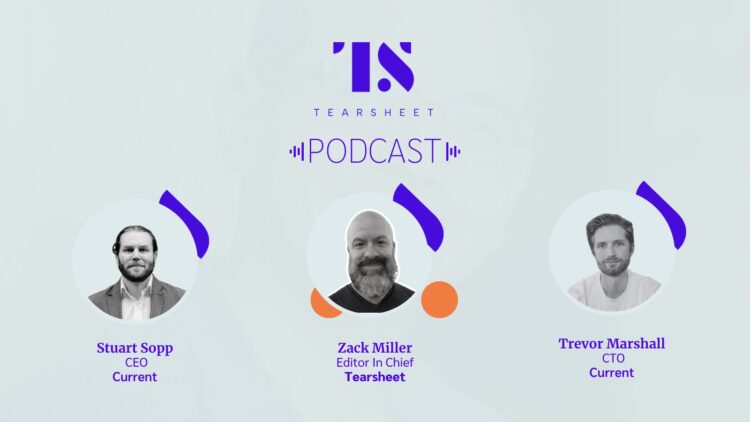
For today’s episode, we’re embarking on an insightful journey with two professionals I’ve spoken with a few times over the years. They’re the co-founders at the helm of Current, a pioneering neobank based in the heart of New York City. Joining us are Stuart Sopp, CEO and co-founder of Current, and Trevor Marshall, the CTO and co-founder, both instrumental in helping to shape the landscape of modern banking for everyday Americans.
Recorded in September of 2023, we dive deep into the genesis of Current’s latest product, the Credit Builder Card. But beyond that, we’ll explore the broader trends impacting financial services and its customers. From the impact of inflation and rising interest rates to the evolving needs of Gen Z consumers, we’ll dissect the challenges and opportunities facing today’s banking industry.
Here’s my conversation with Current’s Stuart and Trevor.
The big ideas
- Addressing the Need for Credit Building in a Changing Economic Landscape: “We saw a crucial need to help our members build credit effectively. The Credit Builder Card emerged from our deep understanding of our customers’ needs and the changing economic climate.” – Stuart
- Seamless Integration of Financial Products into Users’ Lives: “We wanted to create a product that seamlessly integrates into our members’ lives, offering a solution that not only builds credit but also enhances their banking experience with us.” – Trevor
- Emphasis on Financial Education and Behavior Change:“ We’ve really guided users towards adopting the best behaviors, the best possible practices to ensure that they are really getting the biggest benefits out of the product.” – Trevor
- Accessibility and Inclusivity in Banking Products: “Our data suggests that there’s strong interest across various demographics, including Gen Z. By offering a product that combines accessibility, education, and value, we’re breaking down barriers to credit building and empowering all our members to achieve their financial goals.” – Stuart
- Continuous Improvement and Focus on Long-term Relationships: “We’re focused on continuous improvement, ensuring that we deliver unparalleled value to our members while driving towards profitability. Additionally, we’re exploring new avenues for lending and business model innovation to further support our mission of financial empowerment.” – Stuart
- Adapting Technology to Enhance User Experience and Financial Services “We’ve built into our own core stack. So all of the products and services that we build can talk to each other. And that’s in both our live production systems and our analytics and downstream customer data platform.” – Trevor
- Anticipating and Preparing for Future Shifts in Financial Paradigms: “We are well prepared for both sides of that equation. We are early, as we always are, but we are well prepared for both sides of that equation.” – Stuart
Listen to the full episode
Subscribe: Apple Podcasts I SoundCloud I Spotify I Google Podcasts
The following excerpts were edited for clarity.
Read the full transcript (for Tearsheet Pro subscribers)