


From connectivity to intelligence: How Plaid is teaching AI to understand financial behavior
- Plaid won the Data Innovation Award at Tearsheet's 2026 AI Innovation Awards.
- Suddu Seshadri, Plaid's Head of Data & AI, discusses the firm's move from connectivity to intelligence and its bet on finance-specific AI foundation models.

Two borrowers can have the same income, the same account balance, and even the same overdraft history, yet represent very different credit risks. Traditional models often struggle to tell them apart. Plaid believes foundation models can.
This year, the company introduced a two-layer foundation model architecture for financial data. The transaction model makes sense of individual financial events, while the sequential model looks at their order, cadence, and relationships, similar to how a large language model understands words in context rather than in isolation.
That richer understanding is improving lending, fraud detection, and payment risk across Plaid’s network of more than 12,000 financial institutions and 9,000 apps. Its transaction foundation model improved income classification accuracy by 48%, while its sequential foundation model reduced credit default risk by 13.6% at the same approval rate. This foundation can also feed into products such as LendScore, Plaid’s real-time cash flow-based credit risk score, which reduced lending risk by 41% compared to a traditional benchmark, without sacrificing approvals.
The approach earned Plaid the Data Innovation Award at Tearsheet’s AI Innovation Awards 2026. Tearsheet spoke with Suddu Seshadri, Plaid’s Head of Data & AI, about why Plaid moved beyond data connectivity, what drove its decision to build foundation models for finance, and how AI is changing what makes financial data useful.
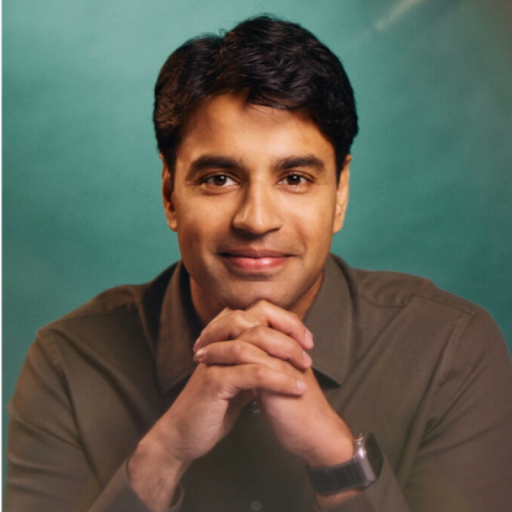
Q: Plaid has evolved from a data connectivity company to an intelligence platform. What drove this change?
Suddu Seshadri, Plaid: Plaid sees financial activity across 12,000 institutions and 9,000 apps. As fintech took shape, the first challenge was bringing financial data online and enabling people to access it and connect it. Plaid powered this shift, providing the infrastructure to make access possible.
Now, with the digital financial ecosystem flourishing, the next phase will be intelligent finance, where AI reasons on top of this financial data. From our connectivity, we’ve built dimensionality around identity, connections, and transactions. This helped build an incredibly deep network and helped us answer critical questions around fraud, payment risk, and credit. The compounding effects of this network are fueling our next evolution.
Q: What convinced Plaid that financial data needed foundation models, not just better traditional risk models?
Suddu Seshadri, Plaid: The consumer demand for self-driving money is clear. In Spring 2026, we released consumer research with the Harris Poll that revealed 86% of adults in the US were already using AI to better understand and manage their money. And they’re not just using it; they want AI to do more for them. As a result, we want to ensure our customers have access to the richest data available as they build new intelligent finance experiences. While traditional models can perform very well on a defined task, each one often has to rebuild the same underlying understanding of transactions, income, cash flow, and behavior.
Financial data also has characteristics that make this difficult: transaction descriptions can be cryptic, labeled data is limited, and timing often changes the meaning of an event. Foundation models allow us to learn a reusable representation of financial activity once and adapt it across many tasks.
Q: What makes Plaid’s approach to building its foundation models fundamentally different?
Suddu Seshadri, Plaid: We build models to help improve how financial services work: our models are designed to make financial products more personalized, useful, and safe. From a decade-plus of powering digital finance, Plaid has built a powerful financial data network. Now, we’re using it to build models that can reveal and make sense of the transactions and patterns that make up a financial life.
We combine network data with models built specifically for financial activity. We are not asking a general-purpose model to guess from raw bank text. Our transaction model learns the economic meaning of individual events, while our sequential model learns order, timing, and changes in behavior over time.
That shared understanding can then improve product-specific systems across payments, fraud, and lending. For example, our transaction foundation work has improved income classification by 48% and loan payment detection by 14%.
Q: How does one shared AI foundation improve products as different as lending, fraud detection, and payments at the same time?
Suddu Seshadri, Plaid: Lending, fraud, and payments rely on many of the same underlying concepts: income, recurring obligations, cash-flow stability, account behavior, and changes over time.
The shared foundation turns those concepts into reusable representations. Each product then combines them with its own data, labels, thresholds, and controls.
That means an improvement in the underlying representation can benefit several products, without treating a lending decision, a fraud decision, and a payments decision as the same problem.
Q: Has AI changed what “good financial data” looks like? If so, how?
Suddu Seshadri, Plaid: The fundamentals have not changed. Good financial data still needs to be permissioned, accurate, current, reliable, and traceable. What has changed is how much value models can extract from context. A transaction means more when you understand the activity that came before it, its timing, its relationship to other events, and whether behavior is changing.
Sequence and relationships were always important. Modern models make it possible to use them at a much greater scale.