Financial firms that treat debt, refunds, and paychecks as separate products, then layer on generic AI chatbots, still leave customers to connect the dots on their biggest financial decisions.
Intuit Credit Karma takes a different approach. Rather than offering a general-purpose chatbot, it has built AI assistants for specific moments like paying down debt, managing tax refunds, and allocating paychecks.
The Debt Assistant, Refund Assistant, and Paycheck Assistant, each help consumers navigate a specific financial decision. Using a shared financial context for each consumer, the assistants generate personalized recommendations and explain the reasoning behind them, helping consumers understand both the recommended action and the logic behind it.
To understand how this works in practice, Tearsheet spoke with Gurpreet Singh, Head of Product at Intuit Credit Karma, who explains the architecture behind the company’s AI strategy and why getting the underlying technological foundation right matters more than building fast.
Q:Debt Assistant pairs a financial optimization engine with an LLM. How do those two systems work together, and why not let the LLM handle recommendations on its own?
Gurpreet Singh, Intuit Credit Karma: The architecture is split deliberately because when you’re helping someone consolidate their debt, you cannot afford to get the numbers wrong – the stakes are too high.
Debt Assistant works in two distinct stages, orchestrated together.
First, we have a deterministic financial optimization engine built on event-based simulations and linear optimization. The engine ingests a member’s debt profile, including open tradelines, balances, interest rates, monthly payments, and their stated goals, whether they’re trying to minimize total interest costs or they need to lower their monthly payments to free up additional cash. From there, it evaluates different debt consolidation scenarios to solve for the mathematically optimal path, guaranteeing the savings number a member sees in their plan comes from an amortization formula, not an LLM’s best guess.
The second stage is powered by generative AI (GenAI).
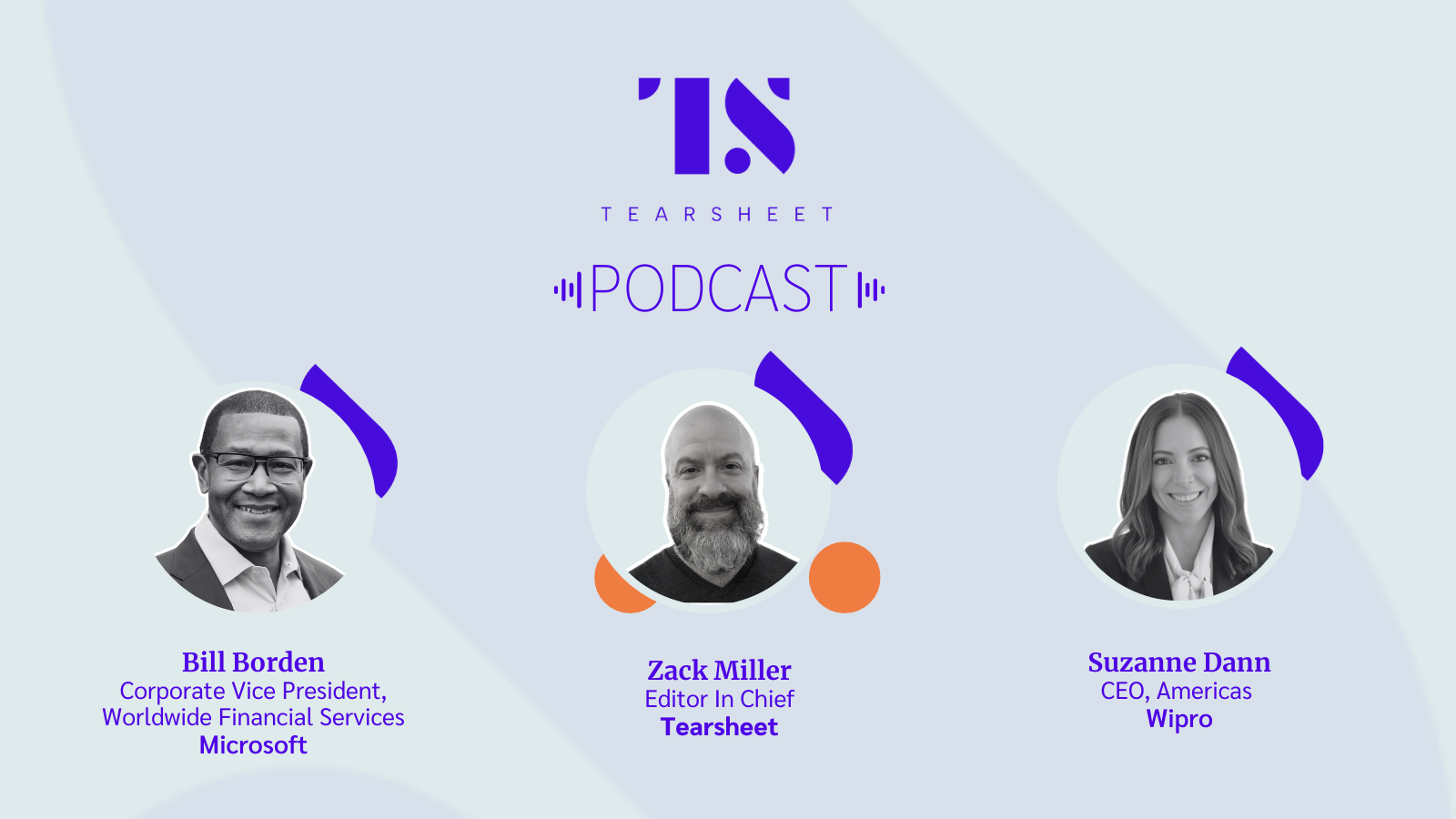
Today, we’re joined by Bill Borden, Corporate Vice President, Worldwide Financial Services, at Microsoft, and Suzanne Dann, CEO for the Americas at Wipro. Together, they discuss their collaboration on leveraging Azure OpenAI to enhance generative AI in finance. This partnership focuses on improving customer experiences, streamlining processes, and ensuring responsible AI practices in the financial industry.
As Suzanne puts it, “My role is to help clients digitally transform by bringing together the right industry expertise, technology, and integration experience.” Bill adds, “Our goal at Microsoft is to build products and services that truly meet the unique needs of financial institutions.”
We’ll explore how cognitive assistants, powered by generative AI, are reshaping customer interactions, loan origination, and even the broker experience, all while maintaining a focus on security, reliability, and expanding AI access across the sector.
Powered Cognitive Assistants for GenAI in Finance
Cognitive assistants are intelligent systems designed to enhance the capabilities of financial professionals. They do this by providing real-time insights and personalized customer interactions. Unlike traditional chatbots, these assistants leverage generative AI and natural language processing. This aims to offer deeper, context-aware support.
“It’s not like a chatbot that is not intelligent. It has all the intelligence built in, and that’s the real differentiator,” explains Suzanne.
Enhancing Customer Interactions
Cognitive assistants can transform how banks and financial institutions interact with their clients. These AI tools offer personalized advice by understanding a customer’s history and preferences. It makes interactions more meaningful and efficient.
“It’s almost like you’re talking to a human who has all the knowledge,” Suzanne notes. She highlights the human-like intelligence of these assistants.
Loan Origination and Investor Onboarding
The partnership between Microsoft and Wipro is focusing on two critical areas. First, loan origination and second, investor onboarding. These processes are often time-consuming and data-intensive. This makes them ideal candidates for AI-driven optimization. “Half the time is spent on loan processing and manual data entry. That can all be removed,” Suzanne points out, emphasizing the efficiency gains from AI.
Improving Broker Experience
Large insurance companies may use Azure OpenAI to improve the broker experience. Cognitive assistants improve productivity. They focus on customer satisfaction by organizing data and giving quick, relevant responses.
“Now they can use this cognitive assistant either through the contact center agent. Or directly to answer their questions,” Suzanne explains.
Responsible AI and Governance: Accuracy and Reliability
The rapid adoption of generative AI brings with it challenges related to accuracy and reliability. Microsoft and Wipro are dedicated to creating safe, secure, and compliant AI systems. “We’re building all types of tools and capabilities into our approach that allows for safety and security,” Bill elaborates.
Democratizing Gen AI in Finance
One of the significant achievements of this partnership is the democratization of AI. It makes advanced tools and platforms accessible to a broader audience. This democratization ensures that AI benefits are widespread and inclusive. “It has democratized AI and made it available to anyone,” Suzanne states.
Data Modernization for GenAI in Finance
Combining Wipro’s consulting experience with Microsoft’s technology creates seamless AI solutions. Generative AI gets better at giving accurate and personalized responses as it learns over time. “Generative AI… is constantly learning. And it is about what data you can provide it to learn from,” Suzanne says. “The power of large language models at a scale that we now can access anybody can access… is the unlock”, Bill explains.
The Big Ideas
Generative AI in financial services is evolving by offering personalized and efficient solutions.“What generative AI offers us and these cognitive assistants is the power to learn and iterate,” says Suzanne. She sheds light on the future of AI in banking.
Microsoft and Wipro’s Partnership combines technology with industry expertise. By doing so, it helps to build AI solutions that address real-world problems. “Our opportunity and excitement at Microsoft is extending our cloud capabilities to specific financial services,” Bill explains.
Cognitive assistants in banking are the next frontier. They are not just advanced chatbots, they are intelligent systems that enhance human capabilities. “It’s almost like having the smartest person next to you who knows everything about what you do,” Suzanne notes.
Responsible AI Practices are crucial to building such AI systems. It includes ensuring that AI systems are accurate, reliable, and compliant is crucial. “We’re building responsible AI that’s safe and secure, but also usable by all,” Bill emphasizes.
The real-world impact focuses on several aspects of generative AI. Improving broker experiences and automating loan origination show AI’s real benefits. “We’re seeing so many of these POCs moving to production,” Suzanne highlights.