




Truist’s Dontá Wilson: ‘Innovation without empathy is empty’

There’s a tension at the heart of modern banking that technology doesn’t seem to totally resolve: how do you be both, digitally excellent and deeply human at the same time? Most banks have picked a lane: either betting on digital efficiency or doubling down on relationship banking. But consumers aren’t asking for one or the other. They want both. They want their banking app to work flawlessly when they need it, and they want someone who actually knows them when it matters.

My guest today is Dontá Wilson, Truist’s Chief Consumer and Small Business Banking Officer. He leads 20,000 teammates serving clients through both digital channels and more than 1,900 community banking branches. His portfolio spans core deposits and loans to mortgage, auto, credit cards, and the full stack of consumer products. He also oversees Truist’s multi-year growth plan that’s reimagining both their digital experience and their physical branches using insights and AI.

We talked about how AI is redefining consumer expectations and trust, what it takes to innovate inside a highly regulated industry while keeping client purpose at the center, and why Dontá believes innovation without empathy is empty.

Watch the episode

https://youtu.be/tHv3wcTghlo

Listen to the episode

Subscribe: Apple Podcasts I SoundCloud I Spotify

Read the whole transcript (for TS Pro subscribers)

Read the whole transcript (for TS Pro subscribers)

Tearsheet Pro

Affirm’s move to become a bank signals a reconfiguration for the BaaS industry and beyond

It’s an interesting time for fintechs, despite regulatory uncertainties like the open banking ruling, that call infrastructural configurations into question. Fintechs like Affirm are also eyeing some greenfield opportunities like becoming a bank. 

The charter rush

Getting a US bank charter isn’t easy. But the rising number of charter applications indicates that multiple major players in the industry perceive Trump’s second term in the White House as the right time to push for the elusive bank status. 

Charter application activity has surged notably under the current administration. Just the first eight months of 2025 produced 21 applications – more than twice the total from the entirety of 2024, which saw only 8. 


Pathward’s Anthony Sharett on why sponsor banking’s future is about evolution, not revolution

Sponsor banking has become one of the most scrutinized business models in financial services. The headlines focus on enforcement actions and regulatory pressure, but behind that noise is a more interesting question: when done right, how do bank-fintech partnerships actually expand financial access to people the traditional system has left behind?

My guest today is Anthony Sharett, President of Pathward. Before joining Pathward he led Nationwide Pet Insurance and served as Interim President of Nationwide Bank. At Pathward, his mission is powering financial inclusion through partnerships with fintechs and platform companies.

We’re going to talk about how the sponsor banking model actually works, what makes these partnerships succeed or fail, and why Anthony believes these relationships are essential to expanding financial access beyond what traditional banks can reach on their own.

Watch the episode

https://youtu.be/BbQ3gVzgWTQ

Listen to the episode

Subscribe: Apple Podcasts I SoundCloud I Spotify

Read the whole transcript (for TS Pro subscribers)

Tearsheet Pro

What BaaS companies learned the hard way in 2024 — and what’s coming next

Is BaaS the land of the dead? Actually, not so much. 2024 was admittedly a difficult time for partner banks and fintechs alike when it came to BaaS. But through the fires of consent orders and lost customer deposits came a realization that all firms involved needed to look more deeply into how they structured their relationships.

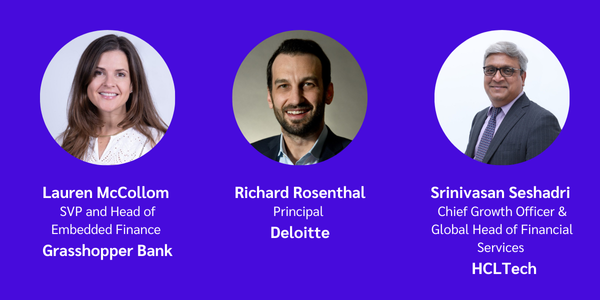
Lauren McCollom, SVP and Head of Embedded Finance at Grasshopper, called 2024 an “enlightening and chaotic year” for BaaS players. As consent order numbers climbed into double digits, hitting institutions like Evolve Bank & Trust, Sutton Bank, and Blue Ridge Bank, many fintechs decided they had to pivot and find new partner banks to ensure their programs’ longevity and survival.

On the other hand, affected partner banks had to dig deep into their existing programs and look for weaknesses, while non-affectees saw more and more fintechs queuing up for partnerships. “This fintech outreach wave which fueled pipelines and enabled partner banks to engage with leading fintechs looking for safety and stability in long-term programs with an established partner bank,” said McCollom.

In today’s story, we look at the major challenges partner banks and fintechs faced in 2024 and what trends may emerge in the new year for these firms.
Recap: 2024’s BaaS trials

Here is a top down view of all the challenges partner banks and fintechs faced last year.

The regulators and BaaS programs: One major difficulty BaaS partners faced was dealing with enforcement actions, reconciliation issues born out of underbaked BaaS programs, and a desire by fintechs to build redundancy in their bank partnerships.

“What came from this period in early 2024 were inquiries and clarification questions from fintechs trying to cut through the noise. Overall this permitted the education of the industry and alignment on what ‘direct’ can mean in BaaS,” McCollom added.

Compliance became top of mind and ultimately led to a reinvigoration of compliance technology providers and a deeper look at how these tools could be used to strengthen existing BaaS partnerships in the face of regulatory scrutiny.

On the other hand, fintechs that foresaw trouble decided they needed a change of partners and sought to migrate their programs leading to a few partner banks seeing more traffic. And while this narrowed the number of partner banks operating in the BaaS landscape, those that continued built much stronger foundations in compliance.

Balancing act: Given the regulatory focus on the industry, firms had to carefully manage building better compliance capabilities while looking after the bottom line. “The balancing act of investing in the necessary infrastructure, controls, and capabilities while maintaining a profitability model added further complexity to the equation,” said Richard Rosenthal, Principal at Deloitte.

The solution to evolving BaaS programs to be resilient to regulatory headwinds for many was putting in place the right infrastructure. There is a class of partner banks and fintechs emerging now that focus on implementing the right controls and processes, added Rosenthal.

Expectations and trends for 2025

_____________________________________________________________________

TS Pro subscription options