
Banking, Banking as a service, Member Exclusive

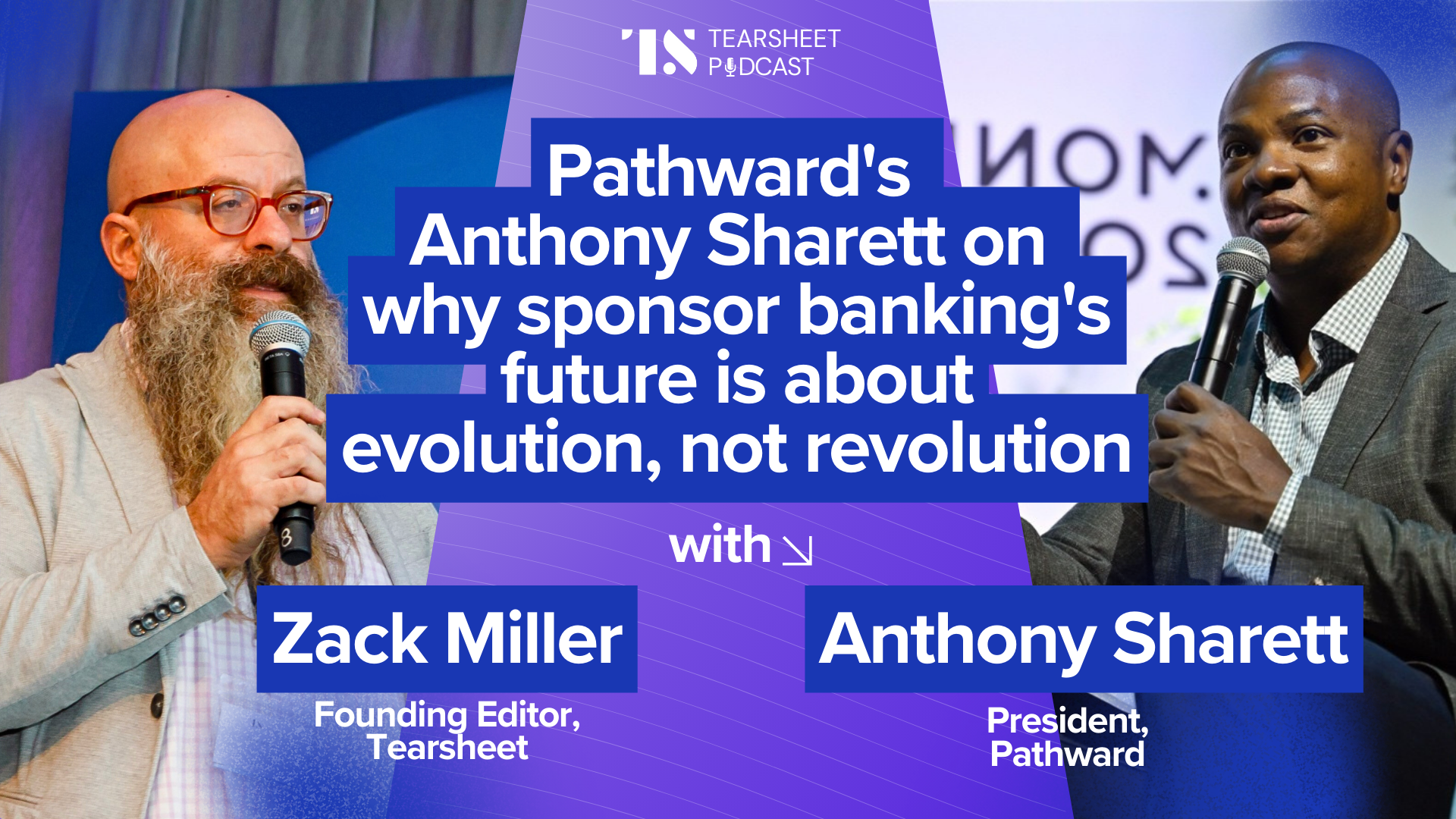
Pathward’s Anthony Sharett on why sponsor banking’s future is about evolution, not revolution

  • After 20 years in sponsor banking, Pathward president Anthony Sharett argues that successful bank-fintech partnerships require the right people, multi-threaded opportunities, and true co-creation.
  • While over 100 banks now call themselves sponsor banks, Suro believes the next frontier lies in AI, embedded finance, and educating all stakeholders about what's possible.
close

Email a Friend

Pathward’s Anthony Sharett on why sponsor banking’s future is about evolution, not revolution

Sponsor banking has become one of the most scrutinized business models in financial services. The headlines focus on enforcement actions and regulatory pressure, but behind that noise is a more interesting question: when done right, how do bank-fintech partnerships actually expand financial access to people the traditional system has left behind?

My guest today is Anthony Sharett, President of Pathward. Before joining Pathward he led Nationwide Pet Insurance and served as Interim President of Nationwide Bank. At Pathward, his mission is powering financial inclusion through partnerships with fintechs and platform companies.

We’re going to talk about how the sponsor banking model actually works, what makes these partnerships succeed or fail, and why Anthony believes these relationships are essential to expanding financial access beyond what traditional banks can reach on their own.

Watch the episode

https://youtu.be/BbQ3gVzgWTQ

Listen to the episode

Subscribe: Apple Podcasts I SoundCloud I Spotify

Read the whole transcript (for TS Pro subscribers)

… Tearsheet Pro

0 comments on “Pathward’s Anthony Sharett on why sponsor banking’s future is about evolution, not revolution”

Business of Fintech, Member Exclusive

How Block is turning Square and Cash App into one local growth network

  • Block has connected Square’s seller network with Cash App’s consumer base via Neighborhoods, giving local businesses a way to turn discovery into direct orders, customer relationships, and potentially repeat visits.
  • Neighborhoods is designed to bypass the traditional marketplace model. Its growth will depend on whether Cash App can generate meaningful customer demand and repeat spending without adding another layer of cost for sellers.
Javarya Kamran | November 10, 2026
10-Q, Member Exclusive

Can Block turn an agentic voice layer into a merchant growth tool?

  • Block is betting voice AI could help Square become more valuable to merchants by improving the workflows that drive sales and service.
  • Turning this ambition into merchant value will depend on execution: accurate orders, useful recommendations, and measurable returns that justify the added cost.
Sara Khairi | November 09, 2026
Business of Fintech, Member Exclusive

Block has built the bridge between Square sellers and Cash App customers. Now it wants more people to cross it.

  • Block’s Neighborhoods connects Square sellers with Cash App users, helping local businesses drive discovery, direct orders, and repeat visits without monthly fees or marketplace commissions.
  • Early growth is promising, with $1 billion in annualized GPV as of June 2026, but the long-term test is whether Neighborhoods drives incremental spending and lasting customer relationships.
Sara Khairi | November 05, 2026
10-Q, Member Exclusive

Huntington wants to win small businesses before they become banking customers

  • Huntington is looking for its next small-business customers before they need a bank.
  • With 1866 Studio, it’s betting that helping entrepreneurs solve everyday business problems now could earn it a role in their financial decisions later.
Sara Khairi | November 02, 2026
Culture and Talent, Member Exclusive, Opinion

AI can eat jobs, but companies still have to build the workforce

  • AI can eliminate tasks and jobs, but companies still need to build the skills, talent pipelines, and workforce needed for what comes next.
  • From entry-level training to decades of institutional knowledge, the risk is that companies cut work faster than they build the people and capabilities to replace it.
Sara Khairi | October 30, 2026
More Articles